In June 2026, UNSW Sydney became Australia's number one university for the first time in the QS World University Rankings. It was placed 19th in the world in the 2027 edition, and it was the only Australian university in the global top 20. That result reflects UNSW's approach since its founding in 1949: a university built around engineering, technology and industry, and one with a strong record of getting graduates into work.
For Indian students planning to study in Australia, UNSW is one of the strongest options available. Engineering and computing are central to it, it is in Sydney, and it offers an award specifically for students from eligible countries including India. This guide explains how to study at UNSW as an Indian student. It covers fees, the entry scores UNSW publishes for Indian school boards, English requirements, scholarships, the move to a new academic calendar, and the visa and post-study work rules that apply to you.
UNSW at a Glance
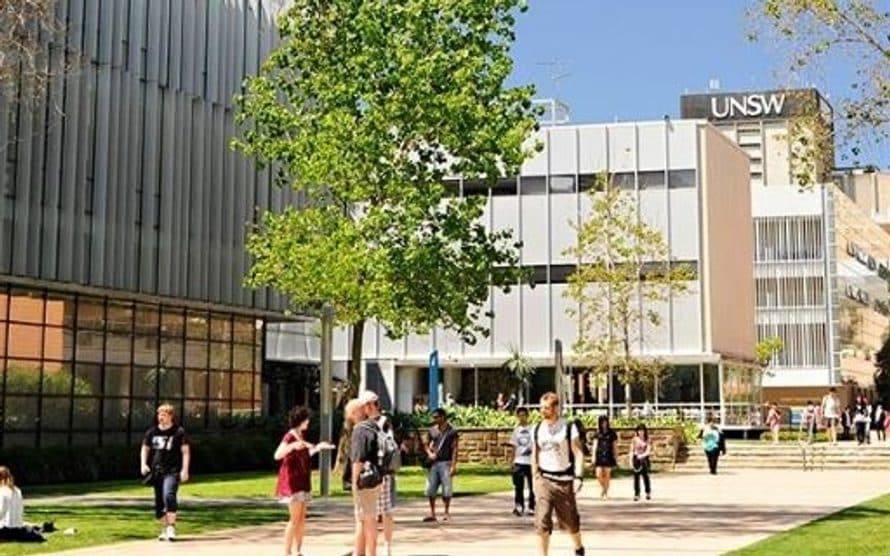
UNSW has four main campuses: Kensington, Paddington, the Sydney CBD and Canberra. Most international students study at Kensington. UNSW says the QS 2027 edition assessed 8,808 institutions, and that among the 37 Australian universities analysed, UNSW came first for employment outcomes.
What Can You Study at UNSW?
1. Engineering
Engineering is UNSW's best-known strength. The Bachelor of Engineering (Honours) is a four-year degree with many specialisations, and there are combined versions with commerce, arts and a master's in electrical or biomedical engineering. At postgraduate level, the Master of Engineering Science is the usual choice for Indian engineering graduates who want to specialise further.
2. Computer Science and Information Technology
The Master of Information Technology is a two-year degree with two entry points. One is for applicants with a cognate background (computer science, software, electronics, data analytics, cyber security and similar fields). The other is a more structured route for applicants from other disciplines. Both lead to the same degree in the same time. You can choose up to two specialisations and finish with a capstone or research project. For school leavers, the Bachelor of Computer Science and the Bachelor of Advanced Computer Science (Honours) are the main options.
3. Business, Commerce and Analytics
The UNSW Business School offers the Master of Commerce, which is popular with Indian commerce and business graduates, and the Bachelor of Commerce. The AGSM runs UNSW's MBA programs. Keep in mind that the Business School's English requirement (IELTS 7.0) is higher than Engineering's.
4. Data Science
UNSW offers data science at both levels, including the Bachelor of Data Science and Decisions for school leavers and postgraduate data science study for graduates. It suits students who want to combine statistics, computing and business decision-making.
Popular UNSW choices for Indian students: Master of Information Technology, Master of Engineering Science, Master of Commerce, postgraduate data science, Bachelor of Engineering (Honours), Bachelor of Computer Science and Bachelor of Advanced Computer Science (Honours).
Entry Requirements for Indian Students
Undergraduate: The Scores UNSW Publishes for Indian Boards
UNSW publishes a 2027 undergraduate entry requirements table with scores for each Indian board. Very few universities publish this, and it makes planning much easier.
| UNSW degree (2027 entry) | CBSE (AISSCE) | ISC | India State Board |
|---|---|---|---|
| Bachelor of Commerce | 85 | 92 | 98 |
| Bachelor of Engineering (Honours) | 81 | 90 | 96 |
| Bachelor of Advanced Computer Science (Honours) | 85 | 91 | 98 |
| Bachelor of Science (Computer Science) | 81 | 89 | 95 |
| Bachelor of Data Science and Decisions | 79 | 87 | 93 |
- How UNSW calculates your score: for CBSE, the average percentage across English or Hindi and your best four other externally examined subjects. For ISC, the average of English and your best three externally examined subjects. For state boards, the average of English and your best three HSSC subjects.
- Which state boards count: for direct entry UNSW accepts the HSSC from only Maharashtra, Tamil Nadu and Karnataka. HSSC results from other states are not accepted for direct entry.
- A guide, not a guarantee: UNSW describes the table as a guide, and actual requirements may be higher or lower. Predicted results have their own column, so check the correct one if you are still in Class XII.
- The India advantage from 2027: undergraduate applicants from International Student Award countries, which includes India, are automatically placed in UNSW's International Admissions Diversity Pathway. It adds 5 points to your International ATAR from Term 1 2027 (not for Medicine), with a minimum equivalent of 75 required. There is no separate form.
Postgraduate (Master's)
- Degree level: UNSW asks for a bachelor's degree at AQF Level 7 equivalent. That is the level of a standard Australian bachelor's degree, most of which take three years, so a three-year Indian degree is not excluded simply because of its length.
- Master of Information Technology: a cognate bachelor's degree with a minimum weighted average mark (WAM) of 65% for the standard entry point. There is also a separate entry point for non-cognate graduates.
- Master of Commerce: a recognised bachelor's with a credit average (WAM 65% or higher), or a WAM of 60-64% with GMAT 600 (or 565 on the GMAT Focus Edition).
- How your marks are read: UNSW converts Indian percentages and CGPAs to its own scale, and does not publish a simple percentage for Indian universities. Ask UNSW, or ask us, to check how your transcript is likely to be assessed before you pay the fee.
English Language Requirements
| Faculty | Undergraduate | Postgraduate coursework |
|---|---|---|
| Engineering (incl. CS, IT) | IELTS 6.5 (6.0 each band) | IELTS 6.5 (6.0 each band) |
| Business School | IELTS 7.0 (6.0 each band) | IELTS 7.0 (6.0 each band) |
UNSW accepts IELTS Academic (including One Skill Retake and IELTS UKVI, but not IELTS Online), TOEFL iBT in the "TOEFL for Australia" version only, PTE Academic, and Cambridge C1 Advanced or C2 Proficiency. LanguageCert Academic and the Michigan English Test are accepted from Term 1, 2027. Your result must be less than two years old at the start of your term. For a cross-faculty double degree, the higher requirement applies.
Tuition Fees for 2026
| Degree | 2026 first-year fee (international) | 2026 fee for the full degree |
|---|---|---|
| Master of Information Technology | A$63,000 | A$130,500 |
| Master of Engineering Science | A$61,000 | A$127,000 |
| Master of Commerce | A$62,000 | A$96,000 |
| Bachelor of Computer Science | A$61,000 | A$192,500 |
| Bachelor of Engineering (Honours) | A$61,500 | A$265,500 |
These are UNSW's 2026 indicative fees, which it reviews every year. They cover tuition only, not other fees and charges. If you are starting in 2027, expect a modest increase and check the current figure on your degree page before you finalise your budget.
How to calculate your visa funds. Home Affairs asks Student visa applicants to show 12 months of course fees, A$29,710 for 12 months of living costs and about A$2,000 for travel if they apply from outside Australia. For a Master of IT that is roughly A$94,700 at 2026 fee levels, before any scholarship. You can instead show that your parents had a personal annual income of at least A$87,856 in the previous 12 months (combined, if both work). The 20% International Student Award reduces the fee part of that total by about A$12,600 in the first year, so include it in your calculation from the start.
Scholarships for Indian Students
- 1. UNSW International Student Award: 20% every year (India eligible)
- India is on the eligible-country list (Attachment A) in UNSW's published terms. Students commencing in 2026 or 2027 receive a 20% tuition fee contribution for the full length of their program. Students who started before 2026 received 15%. It applies to undergraduate and postgraduate coursework degrees. It does not apply to AGSM, UNSW Online, UNSW Canberra, Foundation or study abroad programs. The award is applied directly to your fees. To keep it, you need to stay enrolled full time with no outstanding fees and complete your program within the timeframe on your CoE.
- 2. International Scientia Coursework Scholarship
- UNSW's flagship international award, for students with high academic achievement and leadership and extracurricular strengths. It provides either full tuition fee support for the whole degree or A$20,000 a year towards tuition. It is highly competitive, and a strong application with evidence beyond your marks helps.
- 3. Australia's Global University Award
- A$10,000 for one year, paid towards tuition in the second term of your first year, for motivated international students.
- 4. UNSW College Award
- A$10,000 for the first year of a bachelor's degree, for students who complete a UNSW College Foundation program and progress to UNSW. This is useful if your Class XII marks are slightly below direct entry.
A common mix-up, cleared up. Some aggregator sites describe the 20% International Student Award as available "to all international students". UNSW's terms limit it to citizens of the countries in Attachment A. India is included, which works in your favour, but the award does not cover AGSM, UNSW Online or UNSW Canberra programs. Ignore any site quoting an older 15% figure for new students: that applies only to students who started before 2026. Always check the terms PDF on UNSW's scholarships website for your intake.
Intakes, Offers and the 2028 Calendar Change
- Three intakes a year for now: most degrees start in Term 1, Term 2 or Term 3, and applications for all 2027 terms are open.
- Weekly offers for Indian applicants: UNSW issues undergraduate and postgraduate offers every week to applicants from International Student Award countries, which includes India. Applicants from other countries wait for fixed offer rounds. Each offer has a set acceptance period, and deferrals are not automatic.
- Popular programs fill up: UNSW has announced that some programs reached capacity for 2026 intakes. It recommends applying early and listing several preferences, because changing program after an offer requires a new application.
- The Flex-Semester calendar from 2028: UNSW is replacing trimesters with two 12-week semesters plus optional six-week summer and winter terms. Your degree requirements and qualification stay the same, but the duration of some degrees may vary for 2026 and 2027 starters. Use UNSW's degree-duration search to compare intakes before you accept.
- Visa timing: UNSW advises lodging your Student visa application as soon as you receive your CoE, because processing times may be longer.
Your Student Visa: What Applies to You
- Visa: Student visa (subclass 500), which allows up to six years of study in line with your enrolment. The application charge for most primary applicants is A$2,500 from 1 July 2026 (up from A$2,000). Check the current figure in the Home Affairs Visa Pricing Estimator before you pay.
- Genuine Student requirement: since 23 March 2024 you must show that studying is the main reason for your visa. You answer the application form's questions, with a 150-word limit per response, about your circumstances, why you chose this UNSW course, and how it will benefit you. Home Affairs states that wanting permanent residence in the future does not count against you.
- Funds: 12 months of course fees, A$29,710 for living costs and about A$2,000 for travel if you apply from India, or a parent's or partner's income of at least A$87,856.
- Work rights: up to 48 hours a fortnight while your course is in session, with no limit during scheduled course breaks. Research master's and PhD students have no limit.
- Health cover: Overseas Student Health Cover (OSHC) is compulsory for your whole stay.
Post-Study Work: The Indian Advantage
Under the Australia-India Economic Cooperation and Trade Agreement (AI-ECTA), Home Affairs gives Indian nationals longer stays on the Temporary Graduate visa (subclass 485) than the standard ones:
| Your UNSW qualification | Standard stay | Stay for Indian nationals (AI-ECTA) |
|---|---|---|
| Bachelor's (including honours) | 2 years | 2 years |
| Bachelor's with first-class honours in STEM or ICT | 2 years | 3 years |
| Master's by coursework (e.g. Master of IT) | 2 years | 3 years |
| Master's by research | 3 years | 3 years |
| PhD | 3 years | 4 years |
The engineering honours row is worth noting: a UNSW Bachelor of Engineering (Honours) with first-class honours can bring an Indian graduate three years of post-study work instead of two, so strong grades throughout the degree pay off. You must be 35 or under when you apply (under 50 for research degrees), and the 485 requires IELTS Academic 6.5 overall with 5.5 in each band for tests taken on or after 7 August 2025. Sydney is not a designated regional area, so the extra second-485 year available to graduates of regional campuses does not apply at Kensington.
Applying from Bangalore and Karnataka
- Karnataka II PUC students: UNSW is one of the few Australian universities that names Karnataka. It accepts the HSSC from Karnataka, Maharashtra and Tamil Nadu for direct entry, using the average of English and your best three subjects. The state-board scores are higher than the CBSE ones (for example 96 against 81 for Engineering (Honours)), so treat your target percentage as a planning number from Class XI onwards.
- If your PUC marks fall short: UNSW College diplomas place Karnataka in Category A, with a 75% minimum aggregate, and completing UNSW College can also bring the A$10,000 UNSW College Award.
- CBSE and ICSE/ISC schools in Bangalore: use the CBSE (AISSCE) or ISC columns above. Remember that CBSE is calculated on English or Hindi plus your best four subjects, while ISC uses English plus your best three.
- Graduates of VTU, Bangalore University, IISc, NITK Surathkal, RV, PES, BMS or Manipal: UNSW's public pages do not publish an Indian institution list or tiers. Admission depends on your WAM equivalent and whether your degree is cognate, so collect your full transcripts early.
- Your visa from Bangalore: Student visas are lodged online through ImmiAccount. The Home Affairs list of Australian Biometrics Collection Centres (correct as of March 2026) does not include a centre in India. If Home Affairs needs your biometrics, it tells you after you lodge how to provide them (at a collection centre or, if eligible, through the Australian Immi app), and you have 14 days to do so. Follow the requests in your ImmiAccount, including any health examination with a Home Affairs-approved panel physician.
- Flights: from Kempegowda International Airport (BLR), most students reach Sydney on a one-stop connection through a major Asian hub. Check current routes when you book.
- Local help: Falcon Nova's office is on the 7th floor of Kirloskar Business Park in Hebbal, North Bangalore, and you can book free counselling there or online.
Is UNSW Right for You?
UNSW is a strong choice if you want engineering, computing, data or business at Australia's top-ranked university in the 2027 QS table, with a strong employment record in Sydney. Indian applicants get several specific advantages: the 20% International Student Award, weekly offers, the +5-point Diversity Pathway for undergraduates, published board-by-board entry scores and, for Karnataka students, direct recognition of the state board. Compare it with the University of Sydney if you want to stay in the city with a different teaching calendar, or with ANU if a smaller, research-intensive campus appeals more.
Build a UNSW Application That Uses Every Advantage
At UNSW the details that make the difference are specific: which column of the 2027 entry table applies to your board, whether the Diversity Pathway's extra five points lift you into your first-choice degree, how the 2028 calendar change affects the length of the degree you start in 2027, and how to claim the 20% International Student Award from day one. Falcon Nova Consultants has helped hundreds of Indian students plan their study abroad applications. Book a free, no-obligation counselling session at our Hebbal office in North Bangalore or online, and we will help you map out your UNSW application step by step.
Book Your Free Counselling Session