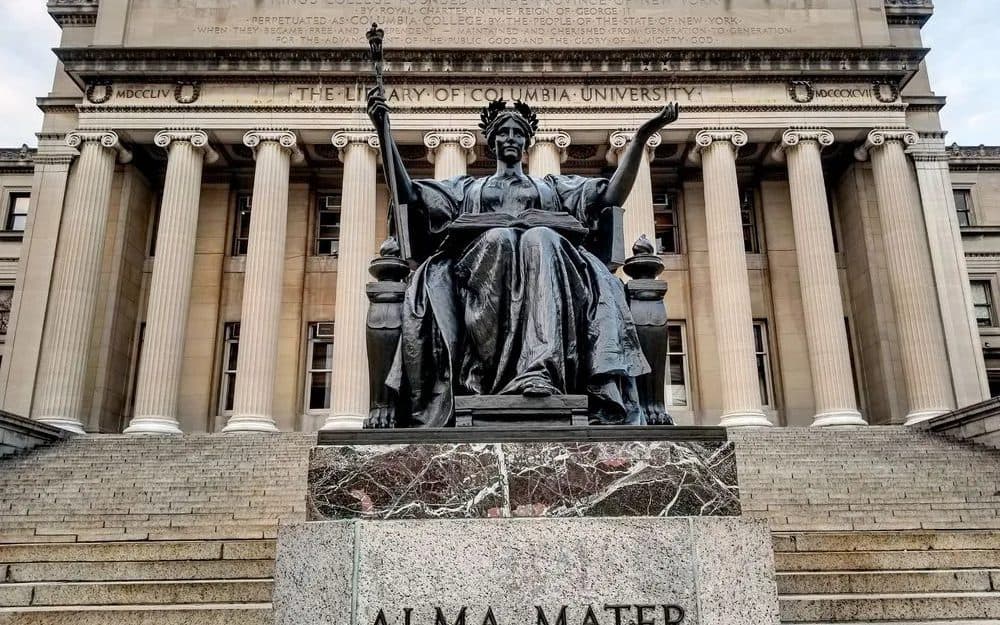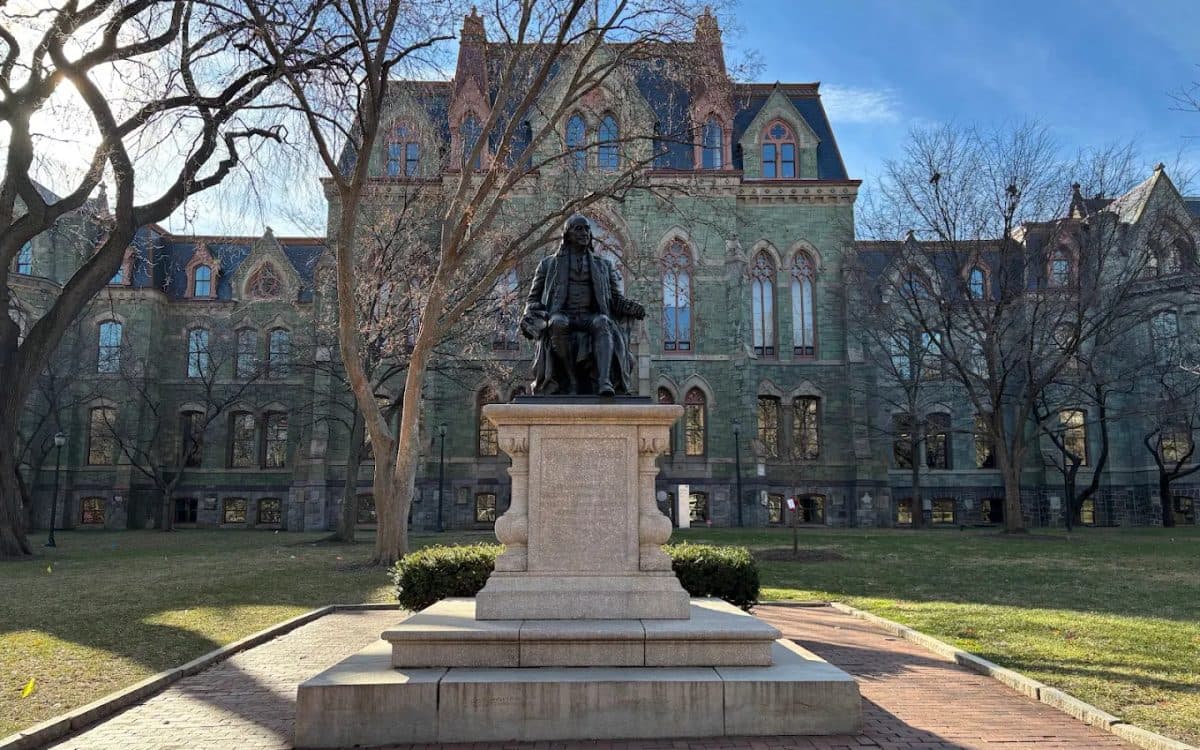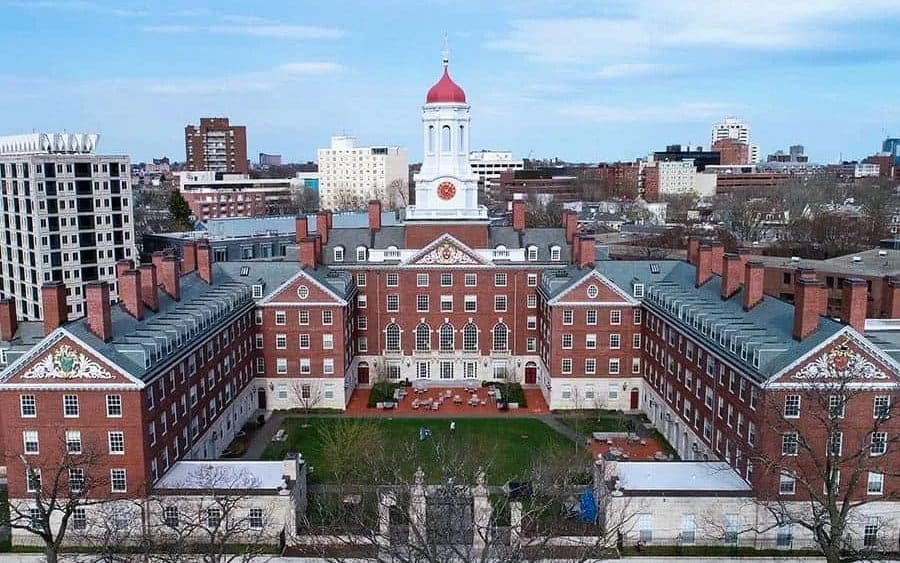
Here is the first thing to understand about Cornell — and it already puts you ahead of most applicants: you do not apply to Cornell University as a whole. You apply to one of eight undergraduate colleges and schools, and that college — not the university — admits you, teaches you, advises you and sets your degree requirements. Four of the eight are stranger still: CALS, Human Ecology, ILR and the College of Veterinary Medicine are New York State contract colleges, publicly funded institutions operating inside a private Ivy League university. Almost nothing written for Indian applicants explains how that structure really works — which is exactly why understanding it gives your family an edge from the first page of this guide.
Cornell was founded in 1865 by Ezra Cornell and Andrew Dickson White around a deliberately radical promise — *"I would found an institution where any person can find instruction in any study."* In 1865 that meant admitting students regardless of religion, race or class, and teaching agriculture and engineering alongside classics. It is one of only three private land-grant universities in the United States, which is precisely why New York State pays for four of its colleges.
For Indian students planning to study in the USA, Cornell answers a specific question better than any other Ivy: *what if I want a realistic shot at the Ivy League without pretending the odds are good?* It has the largest undergraduate body of the eight and the highest acceptance rate of the eight. This guide covers what it takes to study at Cornell University as an international student — including the fee structure that almost every Indian family misreads (and, after this guide, yours will not), and the numbers Cornell publishes but nobody quotes.
Cornell University at a Glance
Cornell has the largest undergraduate body in the Ivy League — 16,138 students — and is the only Ivy running a campus in a small upstate town, a graduate campus on an island in New York City and a medical school in Doha. The Ithaca campus alone covers 745 acres, and the Common Data Set puts the student-to-faculty ratio at 12:1, calculated on 22,155 students and 1,829 faculty.
The Eight Colleges — And the Truth About Contract-College Fees
This is the single most important section of this guide, and the one that gives Indian families the biggest head start when they read it before setting a budget.
- Endowed colleges — privately funded, standard Ivy League tuition: Architecture, Art and Planning; Arts and Sciences; the Cornell David A. Duffield College of Engineering; and Hotel Administration (the Nolan School).
- Contract (statutory) colleges — part-funded by New York State: Agriculture and Life Sciences (CALS), Human Ecology, Industrial and Labor Relations (ILR) and, at graduate level, the College of Veterinary Medicine. The Bursar bills the Charles H. Dyson School and the Cornell Jeb E. Brooks School of Public Policy Bachelor of Science at the same contract rate.
- You apply directly to one of them. Your college-specific essay, your required subjects and your admission decision all sit with that college. Switching internally after you arrive is possible but never guaranteed.
- Cornell does not accept the SUNY application. Even for the state-funded colleges, everyone applies through the Common Application.
The myth worth clearing up before you budget. Indian counselling content routinely tells students that Cornell's contract colleges are "cheaper", and that applying to CALS or ILR will save lakhs. As an international applicant, it will not change your bill by a single dollar. Cornell's Office of the Bursar publishes three undergraduate rates for 2026-27: Endowed $73,946, Contract–New York State Resident $49,816, and Contract–Nonresident $73,946. As an Indian student you pay the nonresident rate — exactly the same as an endowed college. The cost-of-attendance tables confirm it: $99,734 for an endowed college, $99,734 for a contract college as a non-New Yorker, and $75,604 for a New York resident. A New Yorker in the seat beside you pays $24,130 a year less for the same degree. Choose your college for the subject, never for the fee.
What Can You Study at Cornell?
Nearly 80 majors and more than 4,000 courses across 100 academic departments. Cornell's breadth is genuinely unusual — you can take a viticulture course while reading Operations Research, and students do.
1. Engineering and Computing
The engineering college is now the Cornell David A. Duffield College of Engineering, organised into named schools rather than plain departments — the Meinig School of Biomedical Engineering, the R.F. Smith School of Chemical and Biomolecular Engineering, the Sibley School of Mechanical and Aerospace Engineering, and the School of Operations Research and Information Engineering (ORIE), which is the quiet powerhouse behind Cornell's pipeline into quantitative finance. It counts a living alumni community of more than 68,000. Computing sits separately in the Cornell Ann S. Bowers College of Computing and Information Science — Computer Science, Information Science, Statistics and Data Science, Computational Biology and Design Tech — but you enter it through Arts and Sciences or Engineering, not as a ninth college.
2. The Nolan School of Hotel Administration
In Cornell's own words, "the only Ivy League school of its kind" — it pioneered collegiate hospitality education and has set the standard for over a century. Students cook and serve at The Establishment, a working restaurant; run the Hotel Ezra Cornell conference end to end; and train at the Statler Hotel, a full-service hotel on campus. Nolan reports 91% of graduates employed within four months at an average starting salary of $86,000. One correction, because it is everywhere: Cornell's own Nolan page currently cites No. 6 in the world for hospitality and hotel management (CEOWORLD, 2026), not No. 1. It is an endowed school, so the full $73,946 rate applies.
3. Agriculture and Life Sciences (CALS)
The largest of the contract colleges and one of the largest agricultural and life-sciences faculties anywhere: 4,020 undergraduates, 942 graduate students, 306 faculty and $293 million of research expenditure in FY2025. It houses the Charles H. Dyson School of Applied Economics and Management — Cornell's undergraduate business route alongside Nolan — plus the Ashley School of Global Development and the Environment and the School of Integrative Plant Science. If your interest is agri-tech, food science, plant genetics or development economics, this is the strongest single argument for Cornell over any other Ivy.
4. ILR — Labour, Management and the Economy
Founded in 1945 and describing itself as "the preeminent educational institution in the world focused on labor, management and the economy," the ILR School has no real equivalent in India. It draws on economics, sociology, psychology, statistics, history and law to study work itself, with 1,100+ students, 66 faculty and 13,000+ alumni. It is a well-worn route into HR strategy, employment law and consulting.
5. Business — Johnson, Dyson and Nolan
The Cornell SC Johnson College of Business unifies three schools. At graduate level, the Johnson Graduate School of Management ranks No. 6 among US MBA programmes (Financial Times, 2026) and No. 1 for Finance (The Princeton Review, 2027), which is the ranking Indian MBA applicants should actually care about — Johnson's investment banking and consulting placement is its calling card. The Two-Year MBA is $88,934 a year.
Most Popular Courses for Indian Students: MEng in Computer Science, Electrical and Computer Engineering, and Operations Research and Information Engineering; MS and PhD programmes across Bowers CIS; MPS in Applied Economics and Management; the Johnson Two-Year MBA and the Johnson Cornell Tech MBA; MS in Business Analytics; and undergraduate Computer Science, Engineering and Hotel Administration.
Admissions for Indian Students
Undergraduate — And the Number Nobody Quotes
- Testing is back. Cornell was test-optional through the pandemic and reversed it: its admissions office states that "effective for Fall 2026 and beyond, first-year applicants are required to submit the SAT or ACT", across all eight colleges. Cornell superscores the SAT by section, participates in Score Choice, accepts the ACT superscore and does not require the ACT science section. This is Cornell's own policy and not a sector-wide rule — Princeton, for one, is still test-optional for 2026-27.
- Where the bar actually sits: students entering in Fall 2025 had a middle-50% SAT of 1490-1550 (Reading and Writing 730-770, Maths 770-800) and an ACT of 33-35. 93% of SAT submitters scored 1400 or above. Only 43% of that intake submitted an SAT at all, because Fall 2025 was Cornell's last test-optional cycle — the range you are being measured against from Fall 2026 is a range set by self-selecting high scorers.
- Deadlines: Early Decision 1 November (all other materials by 13 November, decision mid-December, binding); Regular Decision 2 January (materials by 19 January, decision late March). Application fee $85. For international applicants the aid deadline is the same day as the application.
- What you submit: the Common Application, the Cornell writing supplement with a college-specific essay, your official transcript, one counsellor recommendation and two teacher recommendations. Interviews are not part of the standard process.
- What Cornell weights most: rigour of your secondary school record, the essays, the recommendations, extracurriculars, talent and personal character are all rated *very important* in the Common Data Set; class rank and academic GPA are *important*. "Level of applicant's interest" is explicitly not considered — so stop worrying about demonstrated interest and write a better essay. Note those ratings describe the Fall 2025 cycle, which was still test-optional.
- Class XII: Cornell publishes no percentage conversion table. Take the hardest subject combination your board offers, keep it consistent with your chosen college's requirements — CALS and Engineering expect strong Maths and Science — and understand that a 95% average with no context is a weaker application than a 92% with real depth outside the classroom.
The honest arithmetic on your odds. Cornell has the highest acceptance rate in the Ivy League — 8.4% — and that genuinely makes it the most realistic Ivy target for a strong Indian applicant. We would rather say that plainly than pretend all eight are equally impossible. But the number that applies to *you* is different, and knowing it precisely is what lets you plan well. Cornell's own Common Data Set for Fall 2025 records 18,566 international applications and 664 admissions — a 3.6% rate, against 9.0% for out-of-state Americans and 13.3% for New Yorkers. In other words, an Indian applicant faces odds roughly two and a half times steeper than a domestic one. For scale, Cornell also offered 9,720 students a waiting-list place and admitted 254 of them. Apply, and build a strong portfolio of applications around it — shaping that portfolio is exactly what our counsellors work through with students, and a free session is the easiest place to start.
Graduate — Does Cornell Accept a 3-Year Indian Bachelor's?
- There is no blanket four-year rule at Cornell, which puts it ahead of several US universities that state one outright. The Graduate School asks for "an equivalent international degree" and hands the judgement to the individual field of study — Cornell admits into more than 80 fields, each with its own admissions committee.
- In practice: a four-year BE, BTech or BArch raises no equivalency question at all. A three-year BA, BSc or BCom is assessed case by case, and the answer varies by field. Get it in writing from the graduate field assistant for your field before you pay the fee.
- Transcripts: official transcripts in the original language, certified English translations, and a certified copy of your degree certificate. A WES evaluation is not required at application stage — Cornell lists WES and others as options for admitted students, which saves you time and money up front.
- GRE: decided field by field. Cornell Engineering states that "most of our M.Eng. programs do not require the GRE, but some of them do." Cornell Tech is blunter — the GRE "is not required and will not be accepted" for its Master of Engineering programmes.
- MEng entry floor: a minimum GPA of 2.7/4.0 overall and 2.5/4.0 across your three most recent terms, with many programmes setting higher bars. The Ithaca MEng runs two to three semesters; the application opens in early September and closes mid-June.
English Language Requirements
- Undergraduate — you are probably exempt. Cornell waives the English test if "English has been the primary language of instruction for the past four years," which covers most CBSE and CISCE students outright. Confirm your school will state it.
- Undergraduate, if you are not exempt: IELTS 7.5, TOEFL iBT 100 for tests taken before January 2026, Duolingo 130, or Cambridge C1 Advanced or C2 Proficiency at 191. TOEFL moved to a new scale in January 2026 — for tests from that date Cornell's minimum is 5.0, with 5.5 recommended.
- Cornell's undergraduate ceiling is IELTS 7.5, not 7.0. Sites quoting 7.0 have copied the *Graduate School* figure, which is a different requirement for a different level.
- Graduate — IELTS Academic 7.0 overall for professional master's degrees. Research degrees in the top score tier additionally require IELTS Speaking of 8.0. Cornell's Graduate School does not accept the Duolingo English Test at all, and accepts only IELTS Academic and TOEFL iBT.
- Graduate exemption that applies directly to India: you are exempt if you earned your degree, while physically present, at a university "located in a country where English is an official language, and where English is the language of instruction" — and Cornell names India explicitly in that list. Most Indian graduates of English-medium universities can skip IELTS entirely.
The Real Cost of Cornell in 2026-27
Cost of attendance, not tuition, is the number that matters — it is what your I-20 is issued against, what the visa officer looks at, and what your family actually has to fund. Cornell's published 2026-27 undergraduate figures:
- Tuition: $73,946 for endowed colleges *and* for contract colleges as a non-New York resident. New York residents in contract colleges pay $49,816.
- Mandatory fees: $1,024 — a $424 student activity fee plus a $600 Cornell Health fee.
- Housing $13,744 and food $7,604 — $21,348 combined, up 3.76% on last year.
- Books and course materials $1,234; personal expenses $2,182; transportation "varies by region" and is costed at nothing.
- Total published cost of attendance: $99,734 for an international student in any of the eight colleges. For a New York resident in a contract college it is $75,604.
Two costs Cornell's headline number leaves out. First, health insurance. Cornell requires international students to be enrolled in the Student Health Plan, which costs $4,092 for twelve months in 2026-27 — and the financial aid office states outright that SHP is *not* included in the estimated cost of attendance, because it is not charged to every student. New students are billed $1,705 for the autumn and $2,046 for the spring. Second, flights. Transportation is listed as "varies" and costed at zero, and Ithaca is one of the harder US campuses to reach from India. Add both and a realistic all-in figure for a first year is comfortably north of $105,000. Plan on that, not on $99,734 — and if you would like a second pair of eyes on the family budget, talk to us before you fix a number.
- Graduate tuition, 2026-27: research doctoral degrees (PhD, JSD, DMA) $20,800 — normally paid by your funding package, not by you. Master of Engineering and other Tier 1 professional master's: $73,946. Tier 2 (MILR, MPA, MPH, MRP, MHA, MLA and the CALS, Human Ecology, ILR and Veterinary MPS degrees): $48,414.
- Research master's are far cheaper than professional ones — an endowed MS or MA is $29,500, a statutory MS or MA $20,800. If you are choosing between an MEng and a research MS, that gap is worth $44,000 a year.
- Professional schools: Johnson Two-Year MBA $88,934; Johnson Cornell Tech MBA $139,030; Law JD and LLM $87,908; MS in Business Analytics $89,864 for the whole programme.
- DVM: $46,230 for New York residents, $68,935 for everyone else — the contract-college gap again.
- Cornell's international office estimates living expenses at $27,507 a year for undergraduates ($2,292 a month) and $37,418 for graduate students ($3,118 a month), and instructs undergraduates to use the Contract–Nonresident tuition rate when calculating.
- Graduate and professional tuition rose by zero to 4.5% for 2026-27; undergraduate tuition rose 3.76%. Assume a similar rise every year of your degree.
Financial Aid for Indian Students
The correction that matters more than any other. No Ivy League university awards undergraduate merit scholarships, and Cornell is no exception. Its Office of Financial Aid states: *"All financial aid is need-based. We do not offer merit or athletic scholarships."* If you want proof rather than assertion, open Cornell's own Common Data Set for 2025-26. Item G under the aid tables — "number of students who were awarded any non-need-based scholarship or grant aid" — reads 0 for the first-year cohort and 0 for all undergraduates. Non-need-based institutional grant spending: $0. Athletic awards: $0. Every "Cornell Dean's Merit Award for Indian Students" you find on an aggregator site is fabricated. There is no application, no scheme page and no award — the real money at Cornell is need-based, and as the entries below show, for international students it is substantial.
- 1. Need-based aid — need-AWARE for internationals, but 100% of need met
- Cornell is need-blind for US applicants and explicitly need-aware for international ones: "interest in or need for financial aid is one factor amongst many considered when making admission decisions." It has worked this way since the fall 2017 cycle, and it is candid about the consequence — some applicants it would like to admit are declined "because we have exhausted our financial aid budget." The compensation is real. Cornell meets 100% of demonstrated need for every international student it admits and makes no partial awards. Its 2025-26 CDS records 7,489 undergraduates with need, every one of them fully met, an average need-based grant of $63,827 and an average package of $67,602.
- 2. What international students actually receive — $88,263 on average
- This is the figure worth knowing and almost nobody quotes it. Cornell's CDS reports institutional aid to undergraduate nonresidents separately: 318 international undergraduates were awarded aid, sharing $28,067,649, at an average of $88,263 each. That average is materially higher than the $63,827 across all undergraduates, which is what you would expect when the aid is need-based and international families cannot draw on federal grants or loans. If your family has genuine need and you get in, the money is real.
- 3. The loan caps — and they apply to you
- Cornell publishes hard ceilings on how much borrowing appears in an aid package and states they apply to "all admitted undergraduates, regardless of state residency or citizenship status." Family income up to $75,000: grant aid and a $5,000 work-study award only, with no student loans and a $0 expected family contribution. $75,001 to $125,000: a maximum of $2,000 in loans. $125,001 to $175,000: $4,000. Above $175,000: $6,000. Cornell will also strive to match a need-based offer from another Ivy League university, Stanford, Duke or MIT — but not an award based on merit or athletics.
- 4. The CSS Profile — the deadline to get right the first time
- Every international first-year and transfer applicant seeking Cornell grant aid must file the CSS Profile when they apply for admission, using code 2098. And here is the rule to know in advance: Cornell states that international applicants who do not apply for financial aid at that point "will not be eligible to apply for financial aid at any time after enrolling as an undergraduate at Cornell." There is no reapplying in year two if your family's finances change — so apply for aid at the start, even if you think you may not need it, and the rule will never touch you. Note too that CSS Profile fee waivers are generally not available to international students.
- 5. PhD funding — 99% fully funded
- This is where Cornell becomes genuinely affordable. Ninety-nine percent of Cornell PhD students are fully funded, with a package covering tuition, fees, health insurance and a stipend. For 2026-27 the nine-month stipend for assistantships and University Fellowships is $36,684, with a summer assistantship worth a further $12,228 over thirteen weeks; Cornell Tech doctoral students receive a twelve-month stipend of $60,719 to reflect New York City costs. A funded Cornell PhD costs an Indian student essentially nothing in tuition.
- 6. Professional master's — assume you are paying in full
- The Graduate School's own language is that research master's and professional degree programmes "provide limited financial assistance." Cornell Engineering is blunter still: "As a professional graduate degree, the M.Eng. is self-funded. Cornell does not provide need-based financial aid for M.Eng. students," and its Dean's and MEC fellowships give preference to domestic applicants. Application fee waivers are generally not available to MEng applicants either. Build your budget on the full $73,946 and treat any award as a bonus. Because Cornell offers no merit aid, external Indian funders carry more weight here than at a UK university with its own scholarships — Inlaks Shivdasani, the JN Tata Endowment, KC Mahindra, the Aga Khan Foundation and the Narotam Sekhsaria Foundation, plus employer sponsorship for MBA and MEng candidates. One tax detail Cornell flags: grant aid above tuition and mandatory fees is taxable US income, and Cornell withholds 14% unless a treaty exemption applies.
Cornell Tech — The One-Year New York Option
Cornell's least-discussed asset among Indian applicants is Cornell Tech, a graduate campus that opened on Roosevelt Island in New York City in 2017 after Cornell and the Technion won a city-run competition. It is a Cornell degree awarded a subway ride from Manhattan, and for a working software engineer it is often a better proposition than Ithaca.
- The MEng in Computer Science runs one year, not two, and is built around Studio — a core curriculum in which you build products for industry partners rather than sit exams.
- Reported median salary for the 2025 class: $140,000, usually with equity, a sign-on or year-end bonus on top. Cornell Tech names Google, Amazon, Palantir, Bloomberg, Visa, Microsoft, TikTok and Scale AI among its employers, reports 86% of graduates in full-time technology roles and 14% founding startups, and counts over 100 companies founded by alumni since the first cohort in 2014.
- Cost, 2026-27: estimated living costs $40,746, health insurance $3,751-$4,092, a New York City health fee of $366 and a $110 activity fee, on top of tuition. Cornell Tech warns that its own tuition rises 3-5% a year.
- Funding: "Need-based financial aid is not available from Cornell Tech." There are merit scholarships for a limited number of master's students, awarded automatically on admission with no separate form — but Cornell Tech states it cannot offer full-tuition funding, and scholarships cannot be applied to housing.
- Deadlines for 2027 entry: priority 1 December 2026, round two 26 January 2027, rolling 1 April 2027. Apply by the priority deadline to be fully considered for scholarship. TOEFL 100 or IELTS 7.0; the GRE is not accepted.
- Other Cornell Tech options: MEng in Data Science and Decision Analytics, Electrical and Computer Engineering, and Operations Research and Information Engineering; the Johnson Cornell Tech MBA at $139,030; the Jacobs Technion-Cornell Dual MS; and an LLM in Law, Technology and Entrepreneurship at $84,722.
Cornell publishes two different MEng tuition figures, and you should budget on the higher one. Cornell Tech's tuition page is headed *2026-2027* but lists the Master of Engineering at $71,266 — the same figure that page carried a year ago under a *2025-2026* heading. The Office of the Bursar, whose rates are set as of 31 March 2026, puts Tier 1 professional master's tuition, which explicitly includes the M.Eng, at $73,946. The Bursar is the office that bills you, and the gap is exactly the 3.76% increase Cornell's trustees approved. Note the same Cornell Tech page *did* update the Johnson Cornell Tech MBA to $139,030, matching the Bursar. Budget $73,946. All in, a Cornell Tech MEng year comes to about $119,260 before flights — not the $116,580 its own page implies.
If the New York City campus is what appeals rather than Cornell specifically, compare this against Columbia before you commit — Columbia is in Manhattan proper, and the two schools recruit into the same firms from very different starting points.
Life in Ithaca — An Honest Picture
Ithaca is small, beautiful and genuinely remote, and the campus is spectacular. Cascadilla and Fall Creek gorges cut straight through it, with waterfalls you walk past on the way to lectures — the local slogan "Ithaca is Gorges" is on half the T-shirts in town. Cornell dominates the place: 26,561 students in a small upstate town. That closeness is the appeal for many students and the drawback for others, and you should decide which you are before you accept an offer.
Plan properly for winter — it is a real one, and entirely manageable if you prepare. Cornell runs its own weather station on campus, reported through the Northeast Regional Climate Center. Over the last 44 complete snow seasons it has averaged 61 inches — 155 cm — of snow a year, peaking at 117 inches in 1993-94. Recent winters have been lighter, but even the last ten seasons averaged 52 inches. In January the average daily high is 31.0°F (−0.6°C) and the average low 14.6°F (−9.7°C) on the 1991-2020 normals — meaning a normal January day does not get above freezing at all. If you are arriving from Bengaluru or Chennai you have never experienced this. Budget $300-500 for a real winter coat, boots and layers in your first weeks, and take the short daylight and persistent grey seriously.
On the Indian community, here are Cornell's own numbers rather than an aggregator's. Cornell publishes a country-of-citizenship table: as of fall 2025 there were 6,729 international students from 129 countries, a quarter of the university — and 739 of them were Indian, the second-largest national group after China's 3,111. The trend is worth stating plainly: Indian enrolment was 810 in fall 2024, so it fell by 71 students, about 8.8%, in a year when the total international population fell 3.1% and Chinese enrolment fell 5.3%. India took the sharper hit. This is not the collapse being reported at some US universities, but it is not growth either, and you should factor it into how you read Cornell's admissions numbers.
The second number changes the picture more than the first. Of those 6,729 international students, only 1,677 are undergraduates. Roughly three-quarters of Cornell's international community is postgraduate, which is why an Indian master's or PhD student lands in a large, established desi cohort while an Indian undergraduate joins a much smaller one — 1,677 international students across a 16,138-strong undergraduate body, about 10%.
- Faith communities are organised and named. Cornell's Office of Spirituality and Meaning-Making, in Anabel Taylor Hall, works with Cornell United Religious Work across 40-plus chaplains and 50-plus student organisations. Its published list includes the Hindu Student Council and Hindu YUVA, the Sikh Students Association, the Diwan Foundation for Muslim Life at Cornell and the Muslim Educational and Cultural Association (MECA). There is no Jain organisation on that list.
- Identity and professional groups: the Asian and Asian American Center (A3C) at 626 Thurston Avenue has served Asian Pacific Islander Desi American students since 2009, and the student directory carries a South Asian Business Association. Cornell's full student-organisation directory sits behind a login-driven platform, so treat any list of "Cornell Indian societies" you find elsewhere as unverified until you see it on CampusGroups yourself.
- Ithaca is a town, not a metro. Its Indian restaurants and grocery options are real but limited, and we are not going to name them from memory — check them the week before you fly, not the week after. If a dense Indian food scene matters to you, that is an argument for a New York or Philadelphia campus, and it is better to admit it now than in February.
- On safety: Cornell publishes an Annual Security and Fire Safety Report under the federal Clery Act, and that is the document to read. We have deliberately not quoted a crime statistic here, because we could not verify the current edition's figures directly — and a borrowed number is worse than none.
- Getting there is the other honest problem. Ithaca Tompkins International Airport is a ten-minute drive from campus — extremely convenient, and small. Delta runs twice-daily service to JFK and United twice-daily to Washington Dulles, which is how most Indian students connect. Cornell also runs a direct Campus-to-Campus bus to New York City.
- Alternative airports, by drive time from campus: Elmira Corning 50 minutes, Greater Binghamton 55, Syracuse Hancock 75, Rochester 110, Buffalo Niagara 150. Many students take a bus or shared car to Syracuse or Newark when the Ithaca fare is high.
- There are no direct flights to India from anywhere near Ithaca. Every trip home is at least two legs, usually three — Ithaca to JFK, Newark or Dulles, then a long-haul to Delhi, Mumbai or Bengaluru. Factor the extra domestic leg and the extra day into every holiday plan.
- On campus, transport is cheap. TCAT buses run across Ithaca and Tompkins County from $1.50 a trip, and the campus itself is walkable — steeply, given the hill.
- Health cover is comprehensive but compulsory. The Student Health Plan is mandatory for international students at $4,092 a year, roughly $341 a month, and most visits to Cornell Health then cost $10. Dental and vision are separate.
Career Outcomes and Staying On
The outcomes are strong where Cornell publishes them: $140,000 median salary for Cornell Tech's 2025 computer science master's class, 91% of Nolan School graduates employed within four months at an average $86,000, and a Johnson MBA ranked No. 6 in the US (Financial Times, 2026) and No. 1 for Finance (The Princeton Review, 2027). Cornell does not publish a university-wide graduate salary in a form we can verify, so treat any single "Cornell average salary" figure you see elsewhere with suspicion. What turns those outcomes into a career is immigration, and the students who fare best are the ones who go in clear-eyed — so here is the current picture.
- OPT gives you 12 months of work authorisation after graduation. STEM OPT adds a 24-month extension — 36 months in total — but only for degrees on the DHS STEM designated degree program list. Cornell Engineering confirms its MEng degrees qualify. Check the CIP code of your specific programme before you enrol; a business or humanities master's does not get the extension.
- Then comes the H-1B, and it is a lottery. USCIS's own figures: for FY2026, 343,981 eligible registrations produced 120,141 selections — 34.9%. For FY2025 it was 135,137 from 470,342, or 28.7%. Roughly two in three qualified candidates are not selected in any given year.
- The rules changed for FY2027, and they now reward higher-wage offers. A DHS final rule dated 29 December 2025 replaced the flat random draw with a weighted selection based on the OEWS wage level your offer meets: level IV registrations enter the pool four times, level III three, level II twice — and level I once. A fresh master's graduate on an entry-level salary is normally a level I registration. DHS's own projection puts a level I registration at a 15.29% chance of selection, against 30.58% at level II. That materially changes the maths on a self-funded MEng.
- Cap-gap still bridges the space between an OPT expiry and an H-1B start date of 1 October where a timely petition has been filed — but it only helps if you are selected.
A rule change taking effect during the 2026-27 year — know about it before you go. As of August 2026, DHS has published a final rule (Federal Register, 17 July 2026) replacing "duration of status" for F-1 students with a fixed admission period, effective 15 September 2026. Students admitted from that date receive a specific *admit until date* — the programme end date on the I-20 or the degree completion date, whichever is earlier, and capped at four years — plus a grace period cut from 60 days to 30. Degrees running past four years, and OPT or STEM OPT periods, will need a formal extension via Form I-539 or a departure and re-entry with an updated I-20, and Cornell warns that "reentry is not guaranteed." One transition concession matters: students who file for post-completion OPT or STEM OPT on or before 18 March 2027 do not have to file a separate extension application. DHS classifies this as a major rule subject to congressional review and says the effective date could still move. Ask Cornell's International Services team about your specific programme before you make travel plans.
The $100,000 H-1B payment — narrower than the headlines, and time-limited. Presidential Proclamation 10973, signed 19 September 2025 and effective 21 September 2025, restricts H-1B entry unless the petition is accompanied by a $100,000 payment. Its operative language limits it to petitions for beneficiaries who are currently outside the United States, and the Secretary of Homeland Security may waive it where the hiring is in the national interest. If you finish an MEng here and move from OPT to H-1B without leaving the country, this is not aimed at you — though travelling abroad afterwards is where it gets complicated. It expires twelve months after taking effect, on 21 September 2026, unless extended. Position as of August 2026 — take advice on your own facts rather than from a forum.
Is Cornell Right for You?
Cornell is the right call if you want the Ivy League name attached to something you can genuinely specialise in. Nowhere else offers hotel administration, labour relations, agricultural science and world-class computing under one crest, and no other Ivy is as open — 8.4% overall, the highest of the eight, with 16,138 undergraduates rather than a few thousand. Its need-based aid is among the most generous anywhere: 100% of demonstrated need met, no loans below $75,000 of family income, and an average of $88,263 to the 318 international undergraduates who received it. If you are a strong applicant with a real financial case, Cornell is the Ivy where both halves of that can work. Compare it against Penn if business is the destination, and against Harvard if you are testing how far your profile stretches.
Cornell will not be the right fit for everyone — and working that out early is a strength, not a setback. The aid is entirely need-based, so if merit scholarships are essential to your plan, better-matched universities exist and we will point you to them. The contract-college rate applies only to New York residents, so choose your college for the subject rather than the fee. The international acceptance rate was 3.6% last cycle and Indian enrolment fell 8.8% in a year — reasons to build a smart portfolio of applications, not reasons to rule yourself out. Ithaca averages 61 inches of snow and has no direct flight to India, which some students find part of the adventure and others would rather avoid. A Master of Engineering means self-funding $73,946 in tuition, stated up front, in a year when an entry-level H-1B registration carries a 15.29% chance of selection — so run that maths honestly, and if a lower-cost route to the same technical outcome suits you better, a one-year UK master's at somewhere like Imperial College London will cost less than half of that, and we say so openly. Cornell earns its price when you use what is specific to it — go in with that plan, and the Ivy League name takes care of itself.
Ready to Build Your Cornell Application?
Cornell is won at the level of detail — which of the eight colleges genuinely fits your profile, whether your field accepts a three-year degree, whether Early Decision improves your odds enough to justify a binding commitment, and how to file the CSS Profile the one time it counts. These are exactly the decisions our counsellors work through with students. Falcon Nova Consultants has helped hundreds of Indian students secure places at top US and UK universities. Book your free, no-obligation counselling session and let us turn Cornell from a page of intimidating numbers into a plan you can actually execute.
Book Your Free Counselling Session