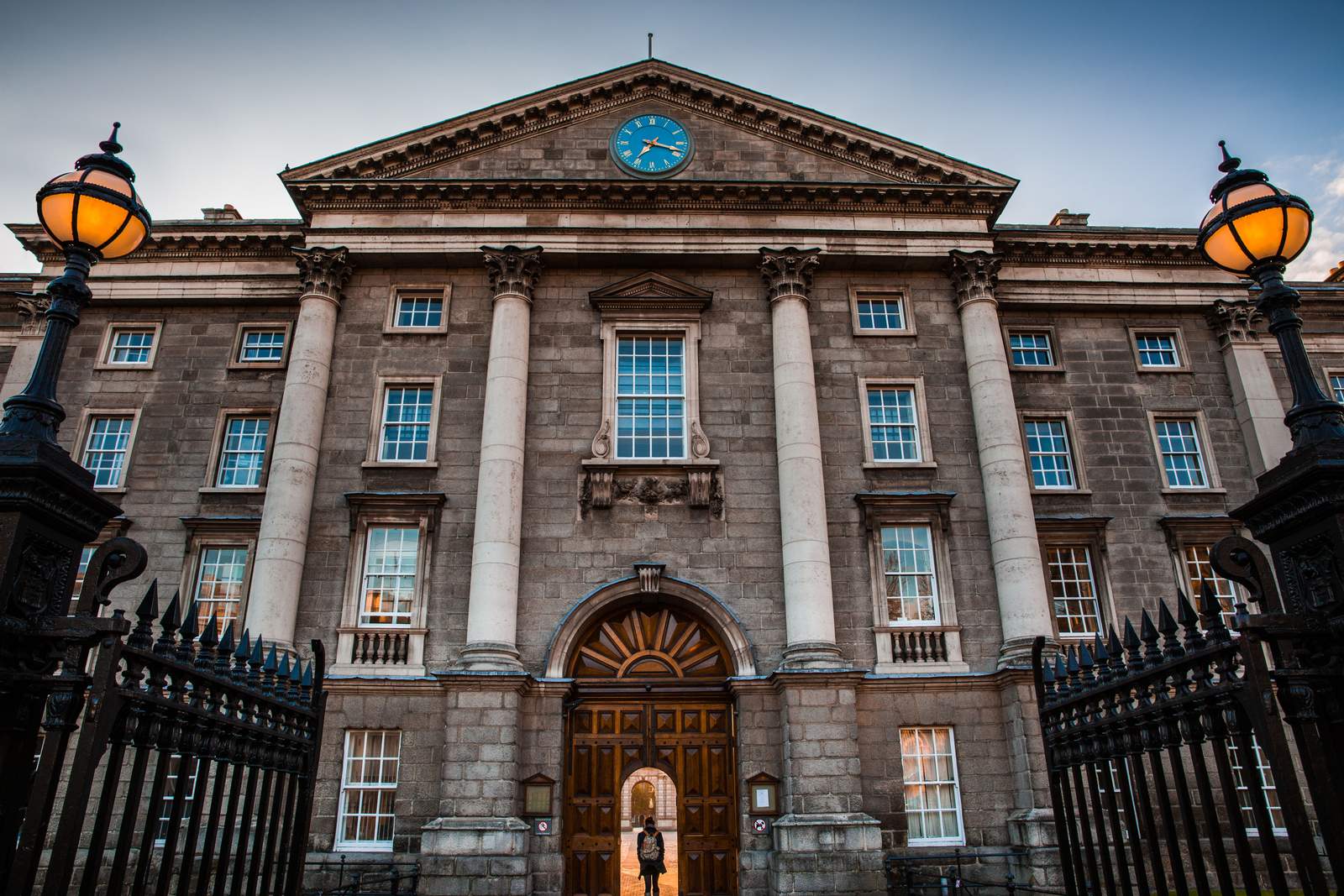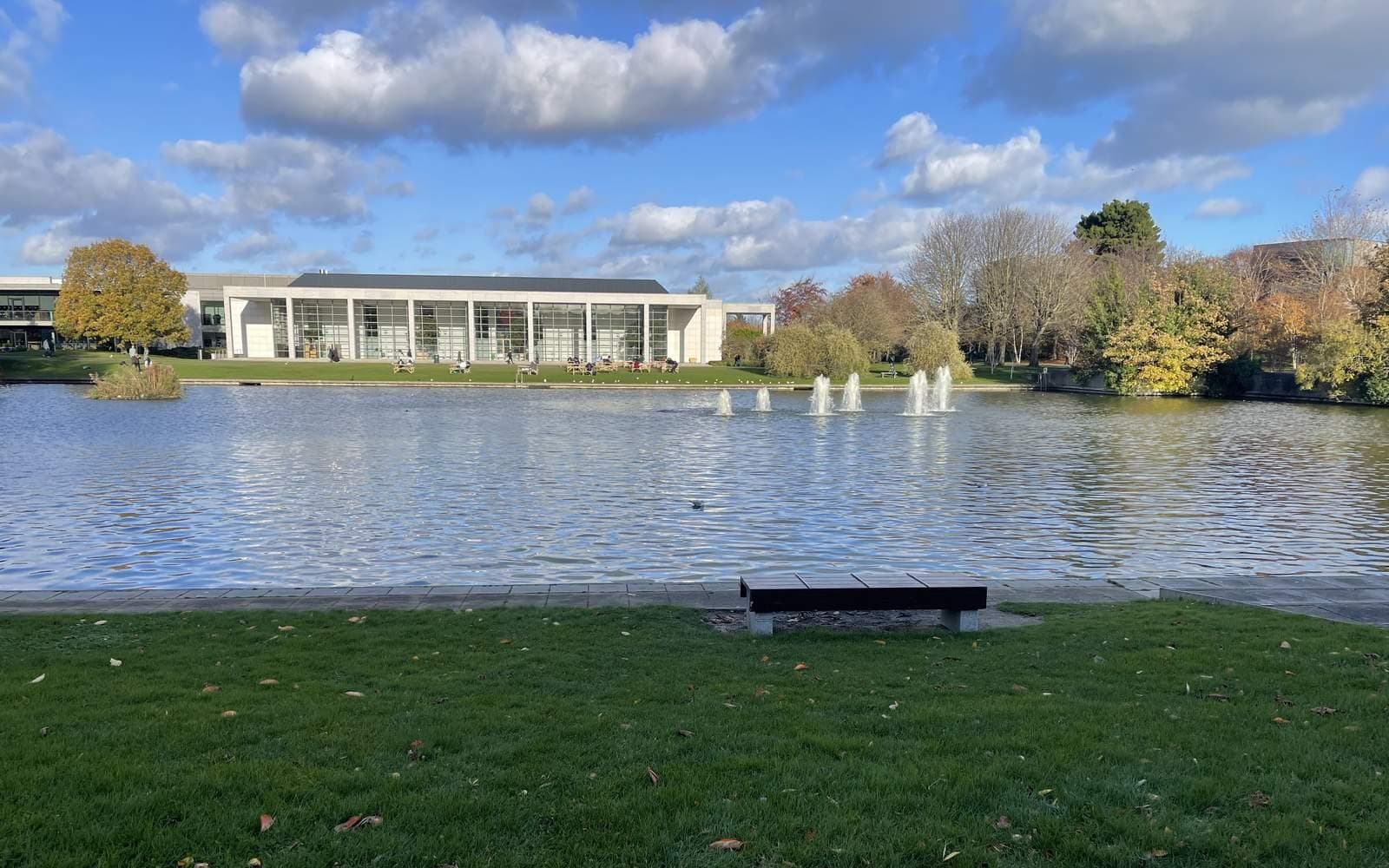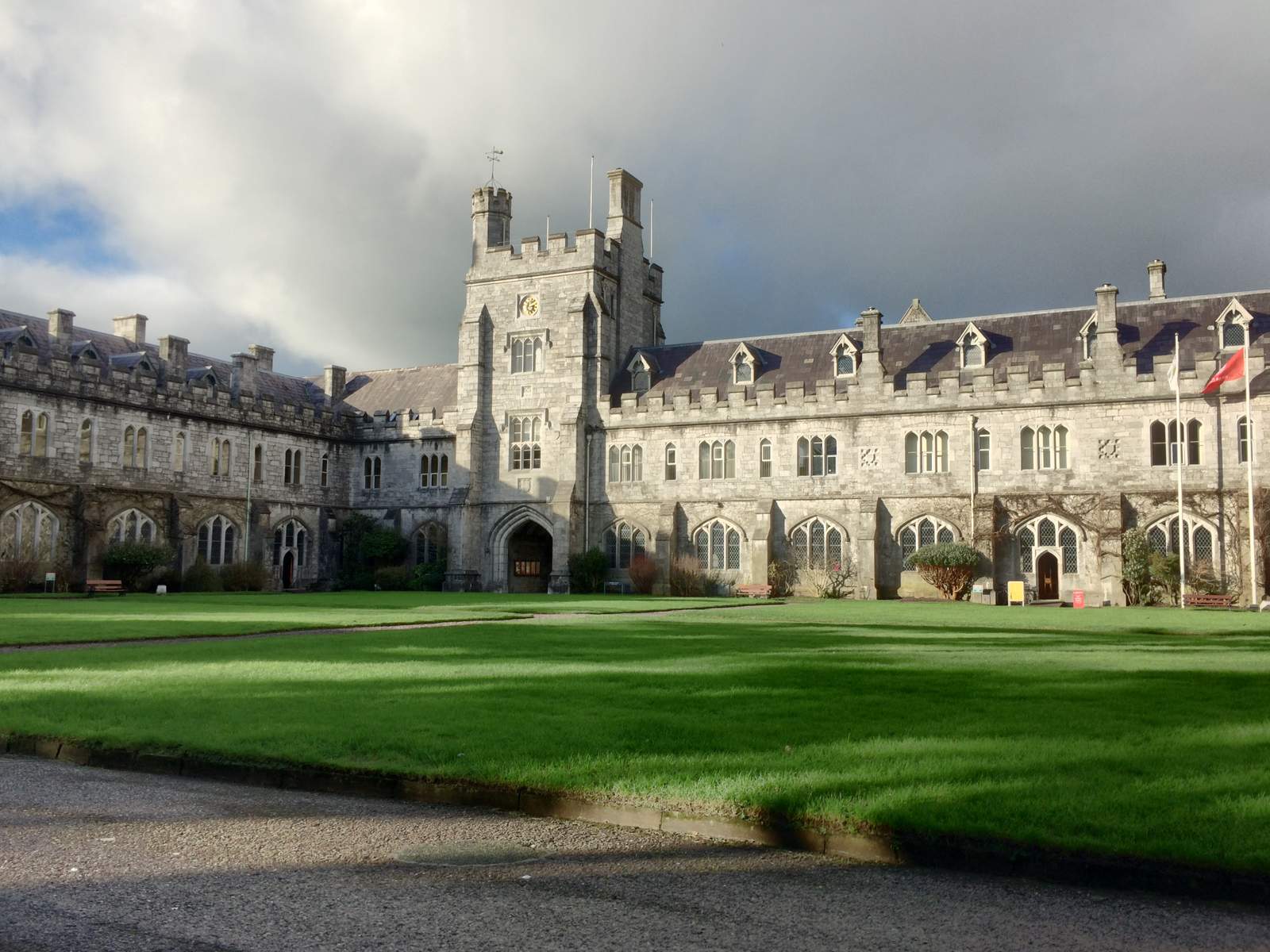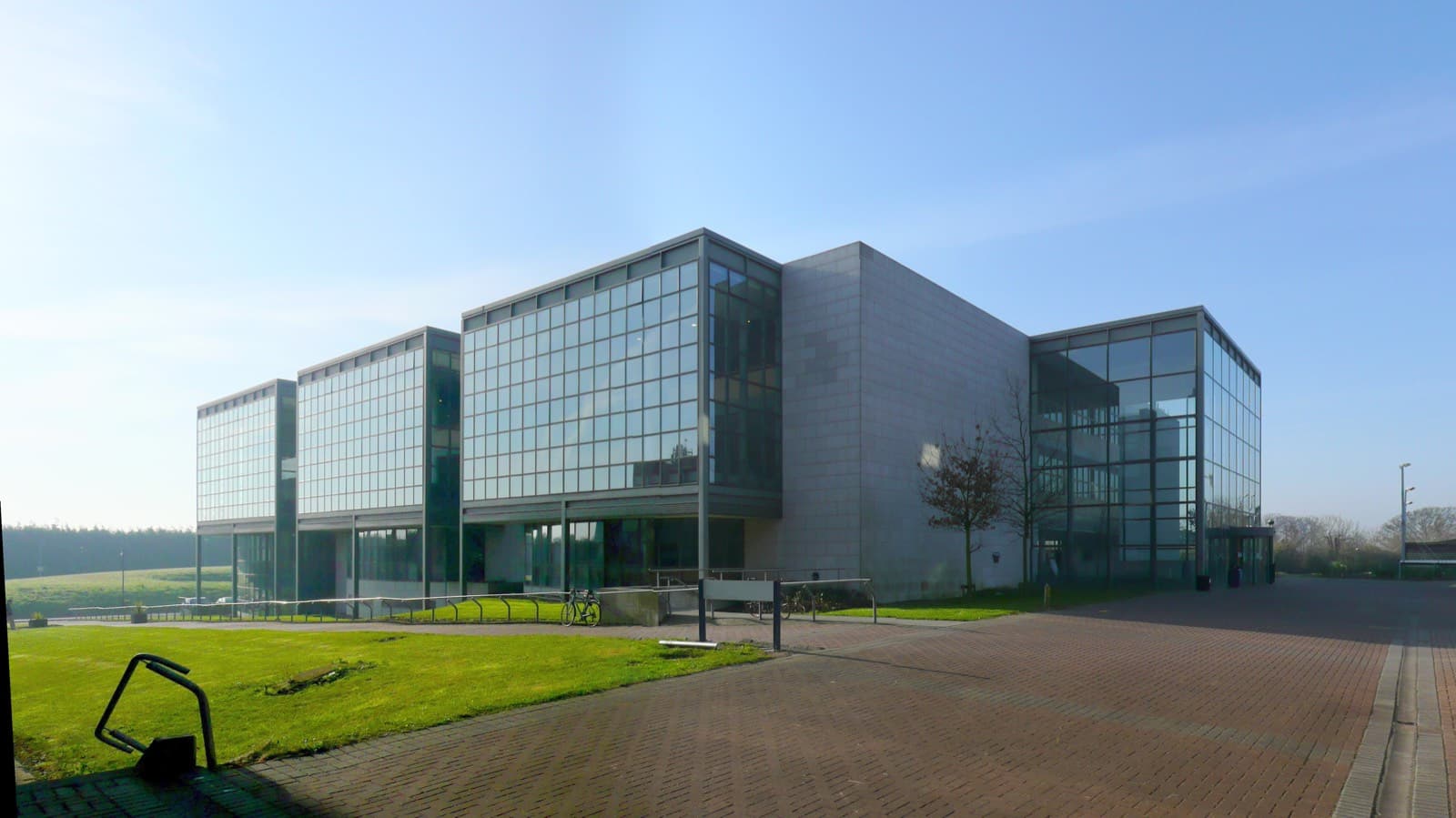
Here's what makes DCU different from most universities Indian students consider: its degrees are built around the workplace from day one. Many DCU programmes include INTRA, a work placement that counts towards your degree, and DCU recommends that employers pay at least minimum wage for it. The university reports that 91% of its Class of 2025 were in work or further study nine months after graduating. And it sits in Dublin, where many of the world's largest technology companies run their European operations.
Dublin City University welcomed its first students in 1980, so it is young by Irish standards, and it has risen quickly. It moved up to 408th in the QS World University Rankings 2027, from 410th the year before. For Indian students planning to study in Ireland, DCU brings together three things that rarely come in one place: a capital-city location, careers-focused degrees, and non-EU scholarships you are considered for automatically, without a separate application.
This guide covers what it takes to study at Dublin City University as an international student: the 2026-27 fees, the 80% Class XII rule, the faculty bursaries you are considered for automatically, and the Irish visa and work rules. Each section ends with what you can do next.
DCU at a Glance
DCU's three academic campuses are all on Dublin's north side. Glasnevin is the main campus, home to Computing, Engineering, Science and the Business School. St Patrick's and All Hallows in Drumcondra host the Institute of Education and much of Humanities. All three are well connected to the city centre, so you get a Dublin address without living in the most expensive part of it.
What Can You Study at DCU?
1. Computing and Engineering
The MSc in Computing is one of DCU's most popular programmes with Indian applicants. It runs for one year full time, and you choose one of four specialisms: Artificial Intelligence, AI with Natural Language Processing, Data Analytics or Cybersecurity. Its standout feature is a 30-credit practicum, where you typically build a prototype software system that targets a real-world problem. That gives you a portfolio piece to show Irish employers. At undergraduate level, BSc Computer Science and BSc Data Science and Artificial Intelligence are strong routes, alongside electronic and mechanical engineering degrees.
2. DCU Business School
The Business School offers one-year master's degrees that suit Indian graduates moving into analytics, finance and marketing: MSc Business Analytics, MSc Finance, MSc Digital Marketing and MSc Management programmes. Undergraduates can take the Bachelor of Business Studies or BSc Digital Business and Innovation, both of which include INTRA placements.
3. Communications, Journalism and International Relations
DCU is well known in Ireland for media and communications. The MA in Journalism, MA in International Relations and MSc in Public Relations and Strategic Communications are also among its most affordable master's degrees for non-EU students, at €17,200 for 2026-27.
4. Science, Health and Education
The Faculty of Science and Health covers biotechnology, bioprocess engineering, precision medicine, financial mathematics and psychology. Several of its postgraduate programmes carry some of DCU's largest non-EU bursaries.
Most Popular Courses for Indian Students: MSc Computing (AI, Data Analytics, Cybersecurity), MSc Business Analytics, MSc Finance, MSc Digital Marketing, MEng Electronic and Computer Engineering, and undergraduate Computer Science and Business Studies.
Entry Requirements for Indian Students
Undergraduate: The 80% Rule
- Class XII average: DCU asks for an overall average of 80% in Class XII from CBSE, CISCE or a recognised state board.
- Subject requirements: Any subject your programme requires (Mathematics for Computing or Engineering, for example) also needs 80% in Class XII. Where Maths is not a programme requirement, DCU accepts 70% at Class X.
- English: Scoring 80% in Class XII English meets DCU's English language requirement, which means you may not need IELTS at all.
- How to apply: Non-EU undergraduates apply directly to DCU through its online application portal, not through Ireland's CAO system.
Postgraduate
- Academic: Most taught master's ask for a second-class honours (2.1) degree or higher in a relevant discipline. MSc Computing, for example, looks for a 2.1 in Computer Science, Computing, Computer Applications or a related subject.
- Indian degrees: DCU assesses non-EU qualifications individually through its international admissions team. Email them with your university, degree and percentage before you apply.
- Documents: Transcripts, degree certificate, English test results and any programme-specific items. DCU gives an official decision only once your full documentation is in.
- Intakes: September is the main intake, and selected programmes (including MSc Computing) also take a January cohort.
English Language Requirements
| Test | DCU minimum |
|---|---|
| IELTS Academic | 6.5 overall, no band below 6.0 |
| TOEFL iBT | 92 |
| PTE Academic | 63, with 59 in every component |
| Duolingo English Test | 120, with 110 in each subscore |
Some Business School and Communications master's ask for more than this standard, so always check your programme page. Scores must come from a single test sitting.
Timing is your biggest advantage at DCU. Popular programmes fill early. The September 2026 MSc Computing intake closed well ahead of the start date, and so did its January 2027 round. Get your documents ready in the autumn and apply as soon as applications open, and you'll be competing while places are still plentiful. If you'd like a clear month-by-month plan for your programme, talk to us and we'll map it out with you.
Tuition Fees 2026-27
| Programme type | Non-EU fee per year (2026-27) |
|---|---|
| Undergraduate: Business School | €17,000 |
| Undergraduate: Engineering and Computing | €17,900 |
| Undergraduate: Humanities and Social Sciences (most) | €17,300 |
| Undergraduate: Science and Health | €15,900 to €23,000 |
| MSc Computing / MEng programmes | €25,000 |
| MSc Business Analytics / Finance / Digital Marketing | €23,000 |
| MA Journalism / MA International Relations | €17,200 |
DCU's fees are subject to an annual increase, so treat these as your planning baseline and confirm your exact figure when you receive your offer.
Scholarships: The Bursaries You Don't Have to Apply For
Here is a useful detail: DCU automatically considers every non-EU applicant for its faculty scholarships. There is no extra essay and no separate form. For 2027-28 entry, the faculty awards include:
- Engineering and Computing
- €4,400 off four postgraduate programmes, including MSc Computing and MEng Electronic Engineering, and €5,000 off nine undergraduate degrees, including BSc Computer Science and BSc Data Science and AI.
- DCU Business School
- €2,000 off eleven MBA and MSc programmes, and €2,800 off six undergraduate degrees, including the Bachelor of Business Studies and BSc Digital Business.
- Science and Health
- €5,000 off selected master's such as precision medicine, biotherapeutics, bioprocess engineering and financial mathematics, and €4,500 off psychology master's. Most undergraduate degrees in the faculty carry €6,100 off.
- Humanities and Social Sciences
- €2,000 off postgraduate programmes and €1,850 off fourteen undergraduate degrees, including BA Journalism and BA International Relations.
- Government of Ireland International Education Scholarship
- A competitive national award for high-achieving non-EU students at Irish universities, including DCU. It needs its own application, so check the current round's dates early.
One detail to plan around: if you receive a DCU International scholarship, you won't also be considered for another DCU award such as a Merit Scholarship. Because the faculty bursary is applied automatically, your best move is simply to apply early with a complete, strong application.
Ireland Visa and Work Rights: What Indian Students Need to Know
From offer letter to Dublin
- 1
Accept your offer and pay tuition. Irish immigration requires you to pay at least €6,000 of your tuition (or the full fee, if it is lower) before you apply for your study visa.
- 2
Show your living funds. You must show immediate access to at least €10,000 for a year of study. Present six months of bank statements, and be ready to explain any large recent deposits. For each later year of your course you also need access to another €10,000, on top of your fees.
- 3
Apply for your study visa on AVATS Online, with your DCU offer, fee receipt, financial evidence, English results and private medical insurance, then give biometrics and lodge your documents at VFS Global. The Embassy of Ireland in New Delhi lists usual study-visa decisions at 4–8 weeks from the day it receives your application, and applications made less than three weeks before your course starts cannot be guaranteed a decision.
- 4
Register within 90 days of arriving. Book an appointment with Immigration Service Delivery (ISD), whose Registration Office is on Burgh Quay in Dublin; the fee is usually €300. You'll receive Stamp 2 permission and an Irish Residence Permit (IRP) card, and DCU's international office can tell you how registration works for its students.
On Stamp 1G you can work full time for any employer, but you cannot be self-employed. To stay on after it ends, you move to a job that qualifies for an employment permit. A DCU master's in computing or analytics puts you in the fields where Irish employers hire most actively.
Applying to DCU from Bangalore and Karnataka
If you're applying from Bangalore or elsewhere in Karnataka, here's how each step of a DCU application works from home.
- Karnataka II PUC marks: DCU accepts Class XII from CBSE, CISCE or a recognised state board. Karnataka's II PUC is conducted by the Karnataka School Examination and Assessment Board (KSEAB), and DCU's 80% overall average is the target. DCU doesn't name individual state boards, so confirm with its international admissions team how your II PUC marksheet will be read, and keep your SSLC (Class X) marksheet ready too.
- Degrees from Karnataka universities: DCU doesn't publish a list of Indian institutions. Graduates of VTU, Bangalore University or any other Karnataka university are assessed individually against the programme's 2.1 requirement, so send DCU your transcripts and final percentage early.
- Your visa application in Bangalore: VFS Global runs an Ireland Visa Application Centre in Bengaluru, open Monday to Friday, 08:00 to 16:00. You can hand in your application without travelling to another city.
- Getting to Dublin: Plan for a one-stop journey from Kempegowda International Airport, usually connecting through a Middle Eastern or European hub. Book once your visa is approved.
- Talk to us in Hebbal: Falcon Nova's office is on the 7th floor of Kirloskar Business Park in Hebbal, North Bangalore. You can book free counselling there in person or online, whichever suits you.
Life in Dublin as a DCU Student
Dublin is compact, English-speaking and very international, and one in five DCU students is from outside Ireland. The Glasnevin campus has its own sports facilities, libraries and student union, and it is a short bus ride from the city centre. Dublin is also one of Europe's pricier cities for rent, so arrange your accommodation as soon as you accept your offer. The €10,000 figure in the visa rules is the minimum you must show, not a full budget, so build your plan around your real rent and living costs.
Career Outcomes
- Strong graduate outcomes: DCU reports 91% of its Class of 2025 in work or further study nine months after graduation.
- Experience built into your degree: INTRA placements put an Irish employer on your CV before you graduate, which is a real advantage when you apply for jobs on Stamp 1G.
- A capital-city job market: Dublin hosts the European operations of many global technology, finance and pharmaceutical companies, so your placement, part-time work and graduate jobs are all within commuting distance.
- Up to two years to launch your career: Master's graduates can hold Stamp 1G for up to 24 months while they build Irish work experience.
Is DCU Right for You?
DCU suits practical, career-focused students who want a Dublin address, degrees designed with employers in mind, and fees that are clear and competitive, with a bursary applied automatically. If you're drawn to computing, analytics, business or communications and want to turn a one-year master's into Irish work experience, DCU deserves a place near the top of your list. Our free counselling can help you shortlist the right programme and time your application.
Make DCU Your Route Into Dublin's Job Market
An automatic non-EU bursary, a practicum or INTRA placement that gives you real Irish work experience, and up to two years of Stamp 1G after a master's: DCU gives well-prepared Indian applicants a lot to work with. Falcon Nova Consultants has helped hundreds of Indian students plan their study abroad applications. Book your free, no-obligation counselling session and we'll help you choose the right DCU programme, apply while places are open, and prepare your visa finances with confidence.
Book Your Free Counselling Session