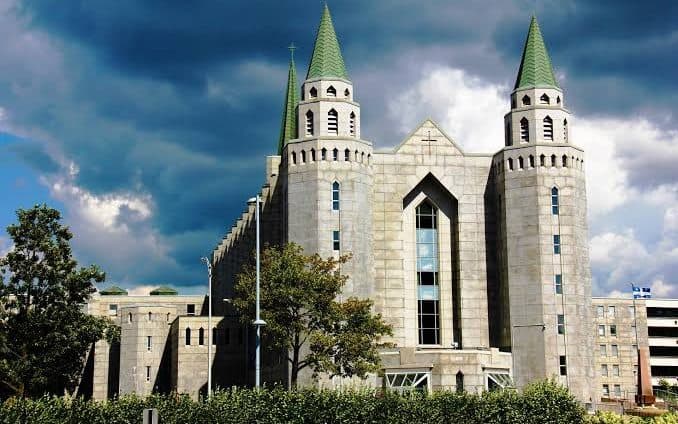
Most Indian students who look at Canada never seriously consider a French-language university — and that is exactly why Laval University can be such a smart choice. Université Laval in Quebec City traces its roots to the Séminaire de Québec, founded in 1663, and received its royal charter in 1852, making it the oldest institution of higher education in Canada and, in its own words, the very first French-language university established in North America. Students who arrive with a plan for the language and for Quebec's separate immigration step open a door that far fewer applicants are competing for.
This guide is written for Indian students planning to study in Canada who want the real picture of Laval: what French level you need, how the Quebec CAQ fits alongside the federal study permit, what 2026-27 fees actually look like, and the doctoral fee exemption that makes Laval one of the most affordable places in Canada to do a PhD.
Université Laval at a Glance
Laval moved from Old Quebec to its Sainte-Foy campus in the 1950s, and today the campus covers about 1.2 square kilometres with more than 30 buildings. Laval places itself among Canada's top ten universities for research funding and has educated more than 350,000 graduates, including three Canadian prime ministers — Louis St. Laurent, Brian Mulroney and Jean Chrétien.
The French Question — Answered Honestly
Here is the insider point that shapes everything else: Laval is a French-language institution and teaching is mainly in French. It is not a bilingual campus where you can quietly study in English. Knowing this up front is an advantage — it lets you choose between arriving with strong French or using the structured pathway Laval has built for learners.
- The test: non-francophone applicants take the TCF tout public, with listening, grammar, reading and written components.
- Timing: your test must be no more than two years old when you submit your application.
- Admission or graduation condition: depending on the programme, passing the TCF can be a condition of admission or a condition of graduation. Your results can also trigger extra French courses, which do not count as credits towards your degree.
- Exemption: applicants who completed primary or secondary education in French are exempt. For most Indian applicants this will not apply, so plan for the test.
- Your score shapes your first year: your TCF result determines how many French-as-a-second-language courses you take, and your programme decides whether passing is an admission or a graduation condition. Check your programme's page and, if in doubt, email the Registrar's Office at documentsadmission@reg.ulaval.ca before you book the test.
The French Immersion Pathway is your head start if you are still learning. Designed for non-French-speaking students with at least 12 years of pre-university education, it lets you complete a bachelor's degree in 4 to 6 years depending on your programme and your French level on admission. More than 65 programmes across seven faculties take part — including forestry, business, engineering and social sciences — and the French courses within it come at reduced tuition. You can apply before you have a TCF result: you are classified as a beginner until you show otherwise. Start French classes in India now, and every level you gain before departure shortens the path.
What Can You Study at Laval?
Laval is a full comprehensive research university, with programmes from agriculture and forestry through engineering, business, health and the humanities. For Indian students, the areas that combine Laval's research strengths with good fit are:
- Forestry, agriculture and environment
- Forestry is among the fields included in the French Immersion Pathway, and Laval's environmental and agri-food research makes this cluster a natural fit for students from India's agricultural universities heading into research.
- Science and engineering
- Laval's Faculté des sciences et de génie covers the sciences and engineering, and engineering is among the fields in the French Immersion Pathway. Check on your programme page whether passing the TCF is an admission or a graduation condition, and build your French plan alongside your application.
- Business
- Business programmes participate in the French Immersion Pathway, which makes a Laval business degree more reachable than most Indian students assume.
- Research master's and PhD
- This is where Laval is most compelling for Indian students: research funding, doctoral fee exemptions and dedicated scholarships (see below) make graduate research here unusually affordable.
Admissions and Deadlines for Indian Students
Your Laval application, step by step
- 1
Choose your programme and confirm on its page whether French is an admission or graduation condition, and what level is expected.
- 2
Take the TCF tout public. Results must be no more than two years old when you apply.
- 3
Apply online by 1 February for a fall start, or by 1 July for winter. Some limited-enrolment programmes close earlier — medicine, pharmacy and several health bachelor's degrees close on 1 November of the previous year — so check your programme page early.
- 4
Accept your offer and apply for the CAQ on Arrima — the Quebec government's online platform.
- 5
Apply for your federal study permit once you hold the CAQ, with proof of Quebec's financial capacity amounts.
Build in time for immigration. Laval itself notes that administrative and immigration procedures for international applicants can take 4 to 6 months. Students who apply well before the 1 February deadline give themselves room for the CAQ, the study permit and housing — and arrive for orientation instead of chasing paperwork.
Laval Fees and Budget for 2026-27
| Item (international students, 2026-27) | Amount (CAD) |
|---|---|
| Undergraduate — per credit (tuition + supplemental + fees) | $933.53 |
| Undergraduate — 30 credits of academic fees | $28,232.96 |
| Undergraduate — student association fees | About $449 a year |
| Health and hospital insurance (mandatory) | $900 a year |
| Course-based master's — 12-credit semester | $11,362.12 |
| Research master's — 12-credit semester | $9,063.76 |
| Laval's estimate: undergraduate all-in budget | $46,863–$51,103 a year |
| Laval's estimate: research master's all-in budget | $36,757–$40,997 a year |
| Laval's estimate: course-based master's all-in budget | $41,354–$45,594 a year |
| Laval's estimate: doctoral all-in budget | $22,173–$26,413 with the fee exemption; $35,009–$39,249 without |
The biggest part of an international student's bill is the supplemental tuition Quebec charges non-residents — $799.23 per undergraduate credit, against base tuition of $103.92. That is why the fee exemption scholarships below matter so much: they remove precisely that supplement. Laval's budget estimate assumes a modest lifestyle, with housing of $5,400 to $9,640 a year and groceries of about $6,160, and it lists first-year one-off costs — winter clothing, furniture, a computer, temporary housing and application fees — of up to $3,275.
Scholarships and Fee Exemptions
- Doctoral fee exemption — for every eligible international PhD student
- Laval offers its supplemental tuition fee exemption to all international students enrolled full-time in a regular doctoral programme with a valid study permit, bringing tuition down to the Québec-student rate. It comes either from the Quebec ministry's quota or, once that quota is reached, from Laval directly.
- Bachelor's and master's fee exemptions
- The same supplemental fee exemption is offered to a limited number of international bachelor's and master's students. It is competitive, so a strong academic record and a clear French plan help.
- Citizens of the World Scholarships
- $20,000 and $30,000 awards for international students entering a research master's or a doctorate (not undergraduates), with an excellence component for academic achievement and a commitment component for leadership and involvement.
- Québec government excellence scholarships (short stays)
- Laval also lists the Québec government's Bourses d'excellence, worth up to $35,000 a year and including the fee exemption and health coverage — but these are for short research or training stays, not for a full degree, so don't build a degree budget on them.
- Research funding
- Graduate students can also be paid through supervisors' funded research projects, and Laval's graduate faculty awards more than $5.44 million a year in student success scholarships.
The PhD opportunity most Indian students overlook. With the doctoral exemption available to every eligible international PhD student, Laval's own estimate puts a doctoral year at $22,173 to $26,413 all in with the exemption — before any supervisor funding or scholarship. If you are aiming for research in forestry, agri-food, engineering or the sciences, it is worth shortlisting Laval alongside the usual English-language names, and we can help you weigh the options in a free counselling session.
The Quebec CAQ and Your Study Permit
Studying in Quebec involves one extra step compared with the rest of Canada, and understanding it early is what keeps your timeline smooth. You apply first to the Quebec government for a CAQ, and only then to IRCC for your federal study permit.
- CAQ for studies: apply online through Arrima, pay the $135 fee (from 1 January 2026) within an hour of completing the form, and upload documents within 15 days. Quebec states a decision is made within 25 business days of a complete application in 80% of cases.
- Quebec's financial capacity rule: from 1 January 2026, a single student must show $24,617 a year for basic needs, plus tuition and a return trip from India. This replaces the federal living-cost figure used in other provinces.
- The CAQ acts as your attestation letter. Outside Quebec, most students need a provincial attestation letter (PAL); in Quebec, IRCC requires your CAQ to state that you have a place in Quebec's share of study permit applications or are exempt from it.
- Master's and PhD students: from 1 January 2026, IRCC no longer requires a PAL or TAL for master's or doctoral students at public institutions, and they are exempt from the federal cap. You still need a CAQ to study in Quebec.
- Quebec's own limits: for 17 December 2025 to 16 December 2027, Quebec has set a maximum number of CAQ applications per institution, with vacancies reallocated on a published schedule. Apply early and ask Laval how this affects your programme.
Working During and After Your Studies
- During your studies: eligible full-time students can work up to 24 hours a week off campus during academic sessions and unlimited hours during scheduled breaks such as summer and winter holidays. You need a Social Insurance Number first.
- Required internships and co-ops: since 1 April 2026, post-secondary students no longer need a separate co-op work permit for a work placement that is a required part of their programme, as long as it makes up 50% or less of the programme and the school confirms the requirement in a letter. The employer must be one accepted by Laval's work placement programme.
- PGWP: Laval graduates are covered by the federal PGWP. There is no field-of-study requirement for bachelor's, master's or doctoral degrees; university graduates need CLB 7 in English or NCLC 7 in French in all four skills. Quebec programmes must be at least 900 hours.
- PGWP length: programmes of two years or more earn a three-year PGWP; master's degrees of at least eight months (900 hours in Quebec) can also receive three years even if shorter than two years.
Your French is a career asset, not just an admission hurdle. The PGWP accepts NCLC 7 in French as an alternative to CLB 7 in English, and Quebec City is North America's leading French-speaking hub. Indian graduates who leave Laval with professional French plus English stand out in Quebec's job market and across Canada's federal and bilingual sectors.
Book Your Free Counselling SessionApplying from Bangalore and Karnataka
If you are applying from Bangalore or anywhere in Karnataka, a few local details make the process smoother.
- Karnataka PUC marks: Laval does not publish a board-by-board rule for Indian school certificates. If you are finishing II PUC with the Karnataka School Examination and Assessment Board, ask the Registrar's Office how your marks are assessed for your programme — and do the same for CBSE or ICSE results — before you pay the application fee.
- Degrees from Karnataka universities: Laval does not publish an institution list for India. Whether your degree is from VTU, Bangalore University or another Karnataka institution, send your programme the transcript details and ask for confirmation in writing.
- French starts at home: begin structured French classes in Bangalore as soon as Laval is on your shortlist, and book the TCF tout public in time for your results to be under two years old when you apply.
- Biometrics: IRCC lists a Bengaluru visa application centre (run by VFS Global) among its Indian collection points. Appointments are free to book, so book your slot as soon as IRCC asks for biometrics.
- Flights: there is no direct flight from Kempegowda International Airport (BLR) to Quebec City, so plan for connections via a major hub and add a travel day to your arrival plan.
- Talk it through locally: Falcon Nova's office is in Hebbal, North Bangalore (7th floor, Kirloskar Business Park), and you can book free counselling in person or online.
Life in Quebec City
Laval describes Quebec City's cost of living as moderate and its housing as very reasonable compared with most North American cities, and notes that the city tops the list of Canada's safest urban centres. It is a UNESCO City of Literature with a busy arts calendar, and in winter it hosts the Québec Winter Carnival. Winters are long and cold, which is why Laval budgets about $620 for winter clothing in your first year — pack for it and you will enjoy one of the most beautiful winter cities on the continent.
Day to day, life happens in French: shops, landlords, part-time jobs and public services. The students who thrive treat that as part of the education — joining conversation groups, taking the reduced-tuition French courses, and using every week to build fluency.
Is Laval Right for You?
Laval is an excellent choice if you are ready to study in French — or ready to commit to learning it — and want a historic research university at costs well below many English-language alternatives. It is especially strong value for doctoral research, thanks to the fee exemption, and for fields such as forestry, agri-food and engineering. If you would rather study entirely in English, a university elsewhere in Canada will suit you better, and knowing that early helps you build the right shortlist. Either way, the students who succeed with Laval are the ones who plan the French, the CAQ and the funds together from the start.
Ready to Plan Your Laval Application?
Laval rewards students who plan three things together: a realistic French pathway, a CAQ and study permit timeline that starts well before the 1 February deadline, and a funds plan built on Quebec's $24,617 basic-needs figure plus tuition and travel. Falcon Nova Consultants has helped hundreds of Indian students plan their study abroad applications. Book your free, no-obligation counselling session and we will help you decide whether Laval fits your goals — and map out every step from TCF to arrival in Quebec City.
Book Your Free Counselling Session