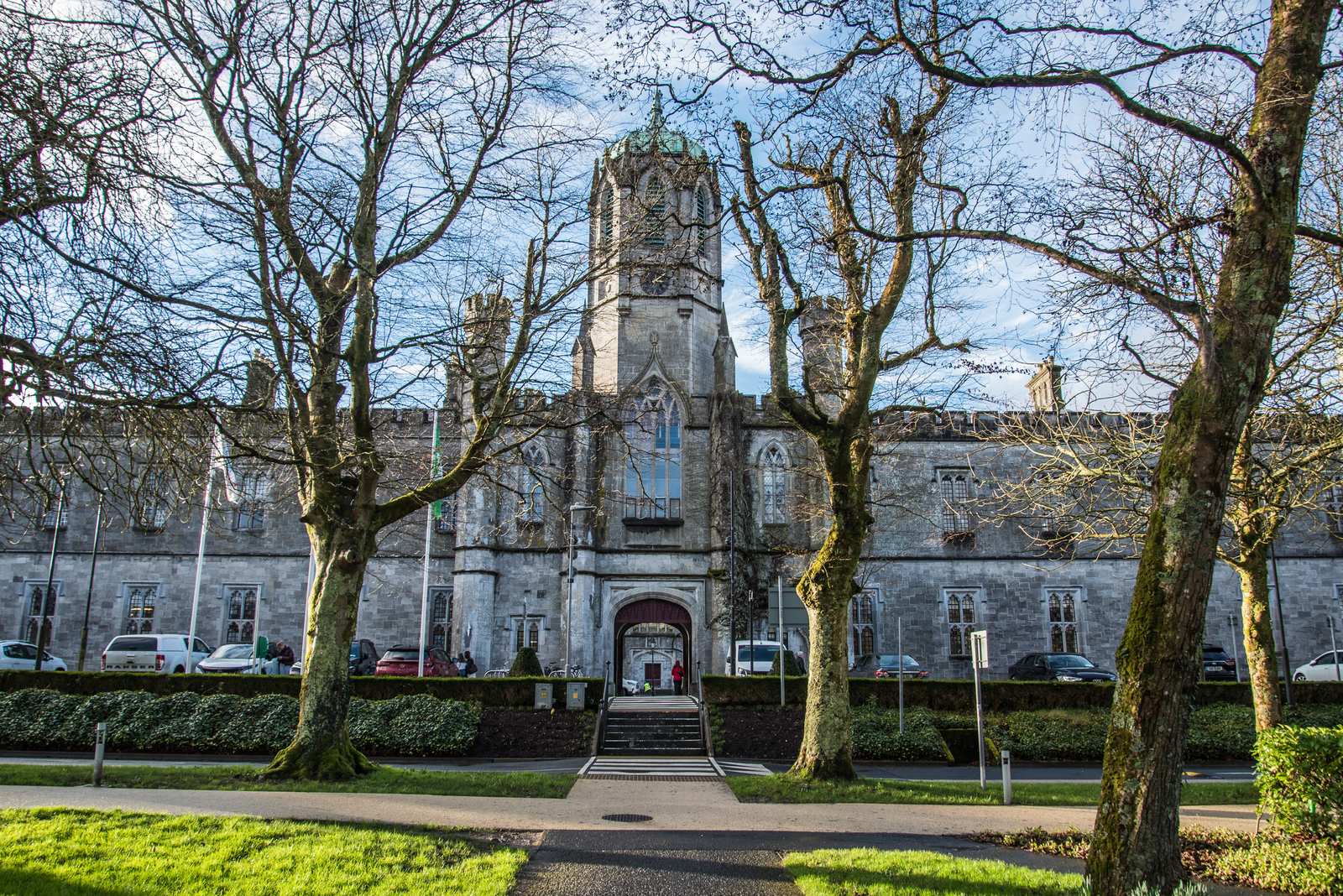
If you are an engineer or scientist who wants to build medical devices, the University of Galway is one of the most interesting places you can study. In its own words it is located in the heart of Ireland's MedTech hub, and its biomedical engineering students often do thesis research with CÚRAM, Ireland's national research centre for medical devices.
Founded in 1845 and ranked 275th in the QS World University Rankings 2027, the University of Galway sits on Ireland's west coast and draws students from more than 125 countries. For Indian students planning to study in Ireland, it has three clear strengths: transparent Indian entry benchmarks, including a lower threshold for NIRF top-100 graduates; merit scholarships worth up to €10,000; and a direct research link with Bangalore. This guide covers everything you need to study at the University of Galway as an Indian student.
University of Galway at a Glance
The university says it has a lively community of Indian students, mainly at postgraduate level. Its Network of Excellence for Functional Biomaterials has signed research agreements with four Indian institutions: the Materials Research Centre at the Indian Institute of Science, Bangalore, IIT Kanpur, IIT Delhi and the Sree Chitra Tirunal Institute of Medical Science and Technology, Trivandrum.
What Can You Study at the University of Galway?
1. Biomedical Engineering and MedTech
The MSc Biomedical Engineering and ME Biomedical Engineering are the university's signature programmes for engineers. The university says its graduates are highly sought after in medical technology, micro-electronics, pharmaceuticals and medical devices. Related options include MSc Medical Electronics and Digital Health and MSc Medical Technology Regulatory Affairs.
2. Computer Science and AI
The School of Computer Science offers the MSc Computer Science (Artificial Intelligence), MSc Computer Science (Data Analytics), MSc Computer Science (Adaptive Cybersecurity) and the MSc/HDip Software Design & Development, the last of which suits graduates moving into software from another field.
3. Business, Finance and Management
The College of Business, Public Policy and Law runs master's programmes including MSc Business Analytics, MSc International Finance, MSc Corporate Finance, MSc Marketing Practice, MSc International Management and MSc Information Systems Management.
4. Engineering, Energy and Science
Beyond MedTech, engineering master's options include Electrical & Electronic, Mechanical, Civil, Energy Systems and Wind Energy Engineering, plus MSc Intelligent Robotics. Science graduates can choose from MSc Biotechnology, MSc Biomedical Science and MSc Genomics Data Science.
Most Popular Courses for Indian Students: MSc Biomedical Engineering, MSc Computer Science (AI / Data Analytics), MSc Software Design & Development, MSc Business Analytics, MSc International Finance, MSc Medical Technology Regulatory Affairs and MSc Biotechnology.
Tuition Fees for 2026/27
| Programme (non-EU, full-time master's) | 2026/27 Tuition | Total incl. €140 levy |
|---|---|---|
| MSc Computer Science (Artificial Intelligence) | €28,500 | €28,640 |
| MSc Computer Science (Data Analytics) | €28,500 | €28,640 |
| MSc Biomedical Engineering | €28,500 | €28,640 |
| MSc Business Analytics | €21,500 | €21,640 |
| MSc International Finance | €20,750 | €20,890 |
These figures come from each course's own page. The University of Galway publishes fees course by course, so check the page for your programme. International students can pay in full before registration, or 50% before registration and 50% by 31 January. For your visa, Irish immigration requires at least €6,000 to be paid before you apply (the university's own guidance mentions €6,000 or 50% of your fees). The university also notes that if your visa is refused, fees paid are refunded less a €190 administration fee, provided you give documentary evidence of the refusal.
Entry Requirements for Indian Students
Postgraduate: The NIRF Advantage
| Degree Classification | Standard Indian Equivalent | NIRF Top-100 (2025) Institutions |
|---|---|---|
| 2:2 | 55% | 52% |
| 2:1 | 65% | 62% |
| First | 75% | 70% |
The NIRF advantage. The University of Galway publishes a lower threshold for graduates of NIRF top-100 (2025) institutions: 62% instead of 65% for a 2:1, and 70% instead of 75% for a first. Look up your college in the NIRF 2025 rankings before you apply. If it's in the top 100, mention it in your application, because a few percentage points can change which programmes you qualify for.
Undergraduate
- Accepted boards: Class 12 from state boards of education, CISCE or CBSE.
- Programme bands: minimum averages of 65%, 70%, 75%, 80% or 85%, depending on the programme's band.
- Verification: You must provide official DigiLocker verification of your Standard XII grades and certificates.
- Foundation route: A foundation-level entry is listed for Class 12 students with 50%.
English Language Requirements
| Test | Standard (IELTS 6.5 courses) | Higher (IELTS 7.0 courses) |
|---|---|---|
| IELTS Academic | 6.5, no section below 6.0 | 7.0, no section below 6.0 |
| PTE Academic | 63, no section below 59 | 65, no section below 61 |
| TOEFL iBT (before 21 Jan 2026) | 88 (L18, R18, S21, W22) | 95 (L20, R19, S21, W20) |
Scholarships for Indian Students
- 1. Global Scholarships: School of Computer Science
- For non-EU applicants to the MSc Computer Science (Data Analytics, Artificial Intelligence, Adaptive Cybersecurity) and MSc/HDip Software Design & Development: merit scholarships of €2,000–€5,000, plus three Excellence scholarships worth €10,000 per programme. At undergraduate level, the BSc Computer Science and IT lists €5,000 per year, plus three €10,000 Excellence awards.
- 2. Global Scholarships: School of Engineering
- €2,000 merit scholarships for taught master's applicants across programmes including MSc Biomedical Engineering, Mechanical, Civil, Energy Systems and Intelligent Robotics, plus one €10,000 Excellence scholarship across all programmes.
- 3. Government of Ireland International Education Scholarship (GOI-IES)
- A €10,000 stipend plus a full fee waiver for one year of master's or PhD study, awarded by the Higher Education Authority. The 2026 call funded around 60 scholarships nationally and closed on 12 March 2026; it runs as an annual call.
Global Scholarship terms for the 2027/28 academic year are already published. Awards are partial fee waivers, you can hold only one, and scholarship students still pay 50% of the full tuition fee before registration. Excellence scholarship winners must accept within the stated window. Scholarship amounts differ by school, so if you want help finding the right award for your course, talk to us.
Student Visa, Work Rights and Stamp 1G
From offer to Galway
- 1
Apply through the university's online postgraduate portal, which opens on 1 October each year for the following September intake.
- 2
Accept your offer and pay your fee deposit. Irish immigration rules require you to pay at least €6,000 of your tuition before you apply for your visa (or the full fee, if it is less than €6,000), and the university may ask for more.
- 3
Show immediate access to at least €10,000 for living costs for your first year, plus access to €10,000 for each later year of your course, on top of your fees. Six months of bank statements are the usual evidence.
- 4
Complete your application on AVATS Online, then give biometrics and lodge your documents at a VFS Global Visa Application Centre. The Embassy of Ireland in New Delhi lists usual study-visa decisions at 4–8 weeks from the day it receives your application, and applications made less than three weeks before your course starts cannot be guaranteed a decision.
- 5
Within 90 days of arriving, register your permission with Immigration Service Delivery (ISD), by appointment; the fee is usually €300. ISD's Registration Office is on Burgh Quay in Dublin, and the University of Galway's international office can tell you how registration works for its students. You receive Stamp 2 and an Irish Residence Permit (IRP) card, which lets you work 20 hours a week during term and 40 hours a week in June to September and from 15 December to 15 January.
- 6
After graduating, apply for Stamp 1G within six months of getting your results: 12 months after a level 8 honours degree; after a level 9 master's, 12 months that can be renewed for 12 more (up to 24) if you show you are actively looking for graduate work.
Applying from Bangalore and Karnataka
- Karnataka II PUC is accepted: The university accepts Class 12 from state boards of education, so II PUC results from the Karnataka School Examination and Assessment Board count. The university also asks for official DigiLocker verification of your Standard XII results, so make sure your II PUC marks card is available there.
- Karnataka degrees and NIRF: The university doesn't list individual Indian colleges. Instead it uses the NIRF top 100 (2025). If you are a graduate of a Karnataka institution, whether a VTU-affiliated college, Bangalore University, Manipal, NITK Surathkal or another, check whether your institution is in that top 100, because it lowers your required percentage.
- A Bangalore research connection: The university's Network of Excellence for Functional Biomaterials has a research agreement with the Materials Research Centre at IISc Bangalore. This is useful context if you are writing an SOP for biomaterials or biomedical engineering.
- Visa logistics: The Embassy of Ireland in New Delhi decides student visas for India, with documents and biometrics lodged through VFS Global. VFS Global runs an Ireland Visa Application Centre in Bengaluru (Monday to Friday, 08:00 to 16:00), so you can lodge your application without leaving Bangalore — confirm current appointment slots on VFS's Ireland–India site when you book.
- Getting there: Expect at least one connection from Kempegowda International Airport, usually via a Gulf or European hub, and then onward travel across Ireland to Galway.
Falcon Nova's office is in Hebbal, North Bangalore (7th floor, Kirloskar Business Park). You can book free counselling in person or online to check your marks against Galway's thresholds and plan your scholarship application.
Is the University of Galway Right for You?
The University of Galway suits students who want a research-led university with clear Indian entry benchmarks, merit scholarships of up to €10,000, and a direct route into Ireland's medical technology sector, all in a smaller, friendly city on the Atlantic coast. If biomedical engineering, AI, data analytics or business analytics is your goal, Galway is well worth a place on your shortlist.
Start Your Galway Application with Confidence
Galway's NIRF-linked entry thresholds, Global Scholarships of up to €10,000 and MedTech-focused programmes give Indian applicants plenty to work with, and the application portal opens every 1 October. Falcon Nova Consultants has helped hundreds of Indian students plan their study abroad. Visit us in Hebbal or join us online for a free session, and we will check your marks against Galway's benchmarks, shortlist programmes and prepare a scholarship-ready application.
Book Your Free Counselling Session