The University of Saskatchewan is one of those universities Indian students discover late and then wonder why nobody told them sooner. A member of the U15 group of Canada's leading research-intensive universities, USask is home to the Canadian Light Source synchrotron and the Vaccine and Infectious Disease Organization (VIDO) — and for 2026-27 it charges international PhD students exactly the same tuition as Canadians. For the right student, that combination is hard to beat.
This guide is for Indian students planning to study in Canada who want the real numbers on USask: fees by programme, English requirements, the scholarship deadline that matters most, co-op, and the federal rules — PAL, proof of funds and PGWP — that apply in Saskatchewan in 2026.
University of Saskatchewan at a Glance
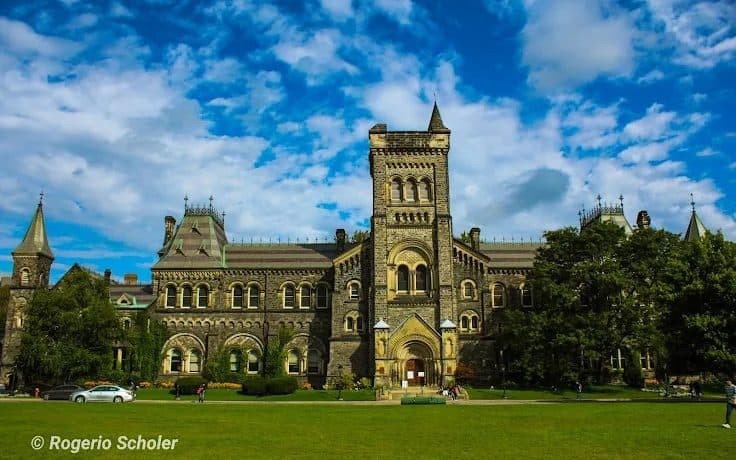
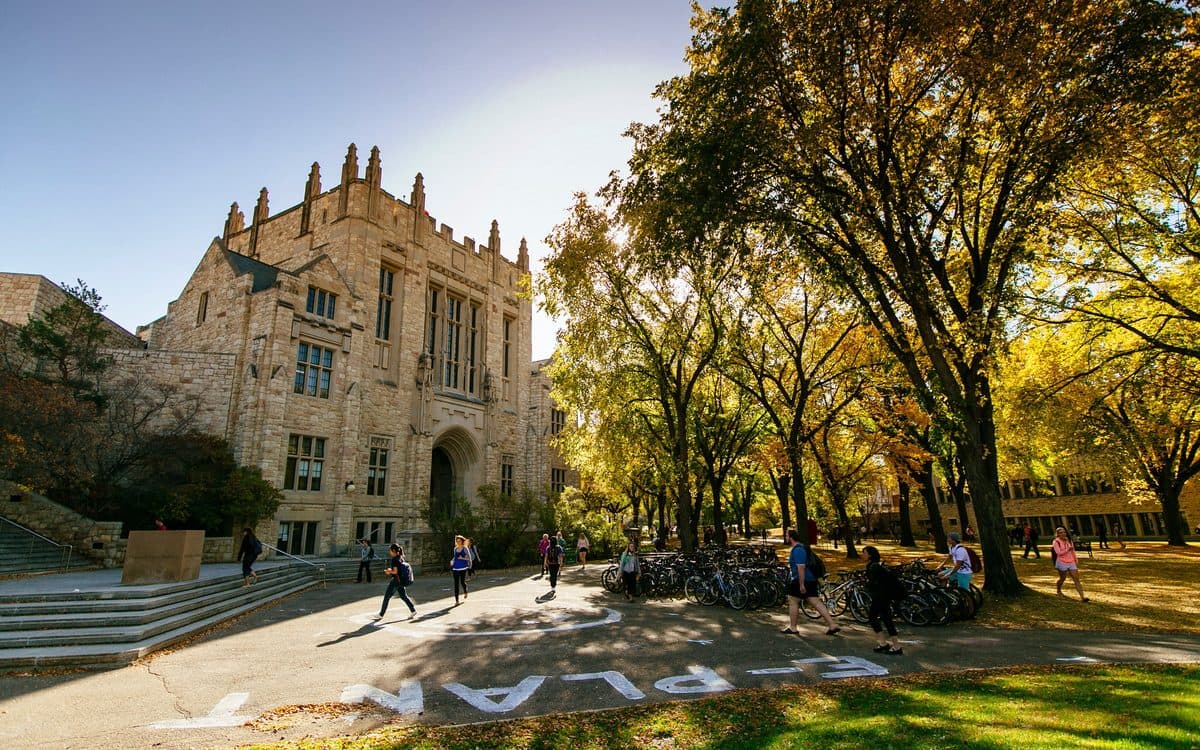
USask describes itself as one of Canada's top research-intensive, medical-doctoral universities, and it backs that up with facilities few campuses anywhere can match — the synchrotron, VIDO, the Global Institute for Food Security, the Global Institute for Water Security and the Sylvia Fedoruk Canadian Centre for Nuclear Innovation. Its campus in Saskatoon, with its greystone Gothic buildings along the South Saskatchewan River, is described by the university as one of the most beautiful in Canada.
What Can You Study at USask?
- Agriculture and food security
- Saskatchewan is one of the world's great farming regions, and USask's College of Agriculture and Bioresources and the Global Institute for Food Security put it at the centre of crop science, soil science and agri-food research — a strong match for graduates of Indian agricultural universities.
- Engineering
- USask Engineering runs an optional, paid co-op programme that 66% of its undergraduates join. It is the priciest undergraduate programme for international students at $59,383 a year for 2026-27, so budget for it from day one.
- Health sciences and vaccine research
- USask brings multiple health science fields together in its Health Sciences Building, and VIDO is one of Canada's leading vaccine development centres — a draw for graduate students in microbiology, immunology and public health.
- Computer Science
- You start in the general Bachelor of Science, and competitive selection into the Computer Science major happens at the end of first year based on your computer science and mathematics grades. Strong first-year results are your ticket in.
- Water, environment and nuclear science
- USask highlights its water resources research as among the best in Canada and the world, and hosts the Fedoruk Centre for nuclear innovation.
Admissions for Indian Students
Undergraduate
- Application fee: a minimum of $120 (non-refundable) for most programmes, paid through apply.usask.ca.
- Scholarship deadline — the one to aim for: 15 February. Applying by then keeps you eligible for USask's automatic international entrance awards.
- Final deadlines (example: Computer Science): Fall 2027 application by 1 May 2027, documents by 1 June 2027; Winter 2027 by 1 September 2026. Deadlines differ for some programmes, so check your programme page.
- Academic requirements: USask's country selector lists requirements for Indian curricula programme by programme. Use it for your exact board and subjects, and ask admissions@usask.ca if anything is unclear.
English Language Requirements
| Test | Undergraduate minimum | Graduate minimum |
|---|---|---|
| IELTS Academic | 6.5 overall, 6.0 in each band | 6.5 overall, no band below 6.0 |
| TOEFL iBT | 4.5 overall, 4 in each section (new scale) | 86 (before 21 Jan 2026) or 4.5, no section below 4.0 |
| Duolingo | 120 overall, 100 in each area (from 1 Jan 2026) | Check your programme |
| PTE Academic | 63 overall, 59 in each skill | Check your programme |
| CAEL | 70 overall, 60 in each part | Check your programme |
USask also exempts undergraduates who completed at least three years of full-time study in an approved English-medium secondary programme, or a year of degree study at an English-medium post-secondary institution. Ask admissions whether your school counts — if it does, you save the cost and time of a test.
Graduate
- Minimum average: a cumulative weighted average of at least 70% on the USask scale in your relevant prior study. Many programmes set higher bars.
- Degree length: USask accepts four-year undergraduate degrees and three-year degrees from Bologna-compliant (European) institutions. If you hold a three-year Indian BSc, BCom or BA, confirm eligibility with your programme before applying.
- Supervisors matter: for thesis-based programmes, reaching out to potential supervisors early is one of the most effective things you can do — it is also where most graduate funding begins.
Meeting the minimum is the start, not the finish. USask's graduate school states plainly that meeting minimum requirements does not guarantee admission. The students who get offers pair solid grades with a clear research fit and early contact with a supervisor — and getting that research pitch right is something we are happy to help with in a free counselling session.
USask Fees for 2026-27
| Programme (international undergraduate) | Annual tuition 2026-27 (CAD) |
|---|---|
| Arts and Science — Arts | $39,007 |
| Arts and Science — Science | $40,894 |
| Agriculture and Bioresources | $41,964 |
| Education | $39,156 |
| Kinesiology | $40,880 |
| Nutrition | $46,163 |
| Nursing | $48,305 |
| Edwards School of Business | $48,932 |
| Engineering | $59,383 |
| Pharmacy — PharmD (year 1) | $73,618 |
| Law | $90,605 |
- Student fees: about $1,331.66 a year for full-time on-campus students (fall and winter terms).
- Books and supplies: USask recommends budgeting $1,500–$2,500 a year.
- Graduate tuition, 2026-27: thesis-based master's $4,279 per term — $12,837 a year for international students; course-based master's $713.20 per credit unit ($2,139.60 for a typical 3-credit course).
- PhD: international students pay the domestic rate — $1,879 per term, $5,637 a year.
The number that changes the maths for researchers. An international PhD at USask costs $5,637 a year in tuition for 2026-27 — the same as a Canadian student pays. Pair that with a funded research position through your supervisor and a doctorate at a U15 research university becomes genuinely affordable for an Indian family.
Book Your Free Counselling SessionScholarships for Indian Students
- International Excellence Award — $10,000
- Automatic consideration based on academic achievement when you are admitted. Apply for admission by 15 February to be eligible.
- International Baccalaureate Excellence Award — $20,000
- Automatic consideration for students completing the IB Diploma Programme, with the same 15 February admission deadline — worth knowing if you are at an IB school in India.
- Graduate funding
- For thesis-based master's and PhD students, funding typically comes through supervisors, departments and research projects. Ask each potential supervisor about funding when you first make contact.
USask lists these awards with a limited number available, so treat them as a bonus you are well placed to win with strong grades, rather than something to build the whole budget on. The simplest way to maximise your chances is to have your application in by 15 February.
Study Permit, PAL and Proof of Funds
- Undergraduates need a Provincial Attestation Letter (PAL) from Saskatchewan to apply for a study permit. PALs issued in 2026 are valid until 31 December 2026. Saskatchewan's 2026 allocation under the national cap is 11,349 applications.
- Master's and PhD students do not need a PAL from 1 January 2026 and are exempt from the federal cap when studying at a public institution like USask. Doctoral applicants outside Canada also benefit from a 14-day processing standard.
- Proof of funds: for applications from 1 September 2026, a single student must show at least $23,448 for living costs, plus first-year tuition and travel. Bank statements, a GIC from a Canadian bank, education loans and scholarships all count.
- Health coverage: USask says full-time international students with a valid study permit may be eligible for Saskatchewan health coverage, applied for on arrival. Students who are not eligible must buy insurance before arriving, for example through guard.me.
Co-op, Work and the PGWP
- Engineering co-op: optional and paid, with an average monthly salary of $4,950 reported by USask; 79% of placements were in Saskatchewan.
- No co-op work permit needed: since 1 April 2026, post-secondary students no longer need a separate co-op work permit for a work placement that is a required part of their programme, as long as it makes up 50% or less of the programme and the school confirms the requirement in a letter. The employer must be one accepted by USask's work placement programme.
- Part-time work: up to 24 hours a week off campus during academic sessions and unlimited hours during scheduled breaks, once you have a Social Insurance Number.
- PGWP: no field-of-study requirement for bachelor's, master's or doctoral graduates; you need CLB 7 in English or NCLC 7 in French. A degree of two years or more earns a three-year PGWP, and so can a master's of eight months or longer.
Applying from Bangalore and Karnataka
If you are applying from Bangalore or anywhere in Karnataka, these local points help you move faster.
- Karnataka PUC marks: USask lists requirements for Indian curricula through its country selector, programme by programme. If you are completing II PUC with the Karnataka School Examination and Assessment Board, use the selector for your board and subjects and confirm with admissions@usask.ca — the same applies to CBSE and ICSE students.
- English exemption: USask exempts students with at least three years in an approved English-medium secondary programme. Ask admissions whether your Bangalore school qualifies before you book IELTS.
- Degrees from Karnataka institutions: USask does not publish an Indian institution list. If you hold a three-year degree from Bangalore University or elsewhere, confirm eligibility with your graduate programme; a four-year degree such as a VTU BE meets USask's stated degree-length rule.
- Biometrics: IRCC lists a Bengaluru visa application centre (run by VFS Global) among its Indian collection points. Appointments are free to book, so book your slot as soon as IRCC asks for biometrics.
- Flights: there is no direct flight from Kempegowda International Airport (BLR) to Saskatoon, so plan for connections via a major hub.
- Talk it through locally: Falcon Nova's office is in Hebbal, North Bangalore (7th floor, Kirloskar Business Park), and you can book free counselling in person or online.
Life in Saskatoon
Saskatoon is a friendly, manageable prairie city built around the South Saskatchewan River, and campus life at USask includes 15 Huskies varsity teams and a large student community from 130 countries. Winters on the prairies are long and properly cold, so budget for a good coat and boots in your first weeks — students who come prepared find the crisp, sunny winter days a highlight rather than a hardship. The summers are long, bright and warm, which is when the riverbank trails come alive.
Is USask Right for You?
USask is an outstanding fit if you are drawn to agriculture, food security, vaccine research, water science or engineering, and especially if you are heading into a PhD, where domestic-rate tuition makes a world-class research environment unusually affordable. Undergraduate tuition is higher than at some prairie neighbours, particularly in Engineering, so compare the full cost with your shortlist before you decide. With the numbers in front of you and an application in by 15 February, USask can be one of the smartest choices on your list.
Ready to Build Your USask Application?
Getting USask right comes down to a few decisions made early: the programme that fits your profile, an application in by 15 February for the automatic entrance awards, the right English test, and — for researchers — a supervisor who shares your interests. Falcon Nova Consultants has helped hundreds of Indian students plan their study abroad applications. Book your free, no-obligation counselling session and we will help you shape a USask plan that covers everything from admission to your PGWP.
Book Your Free Counselling Session