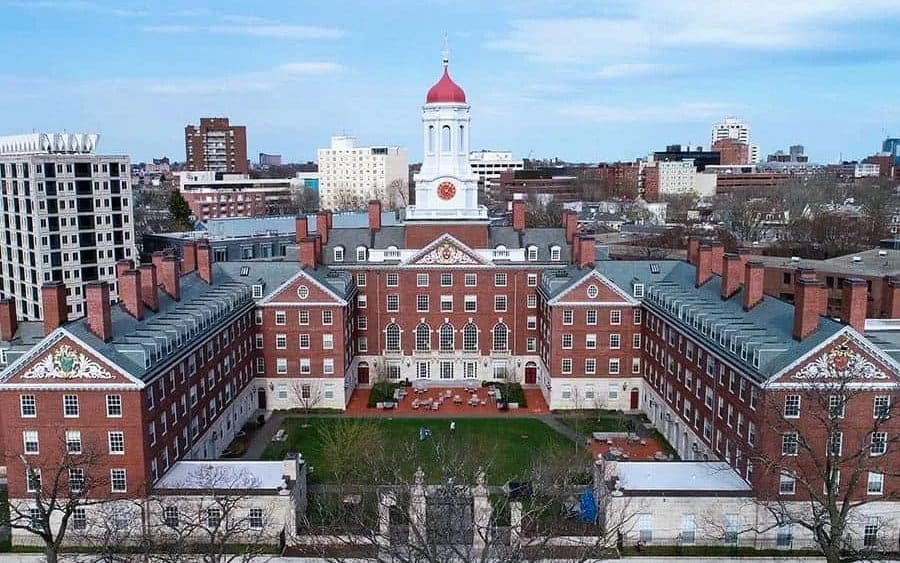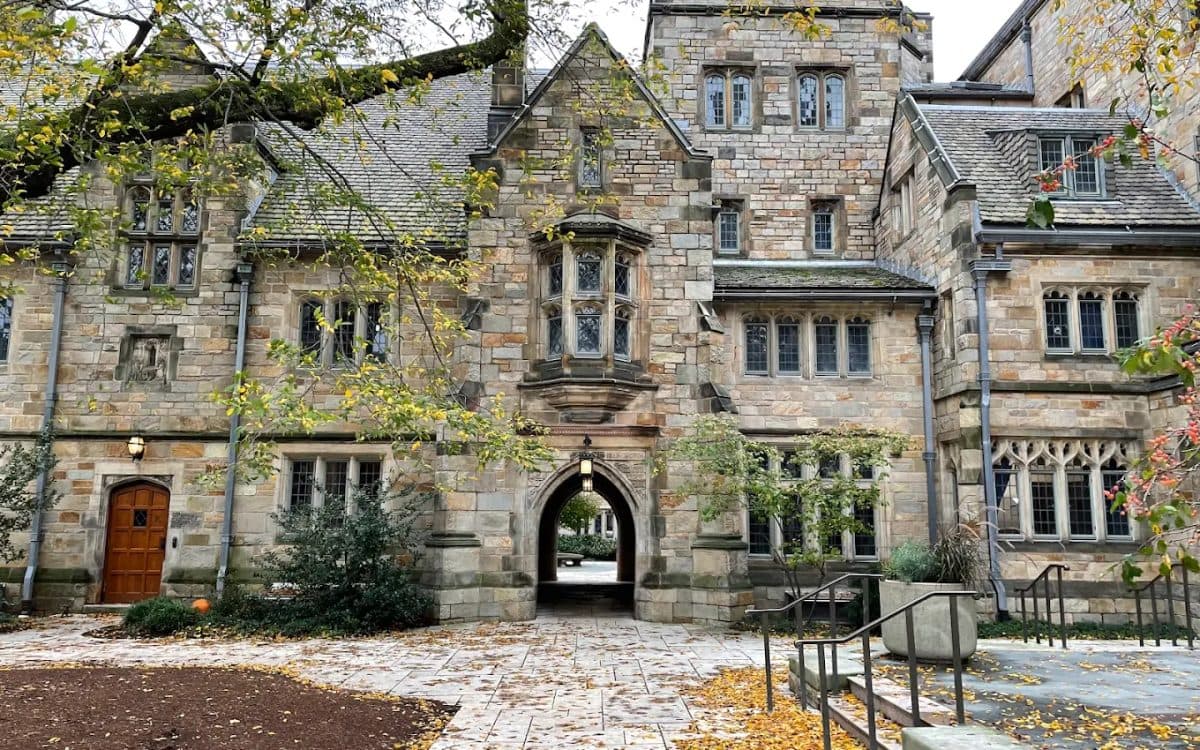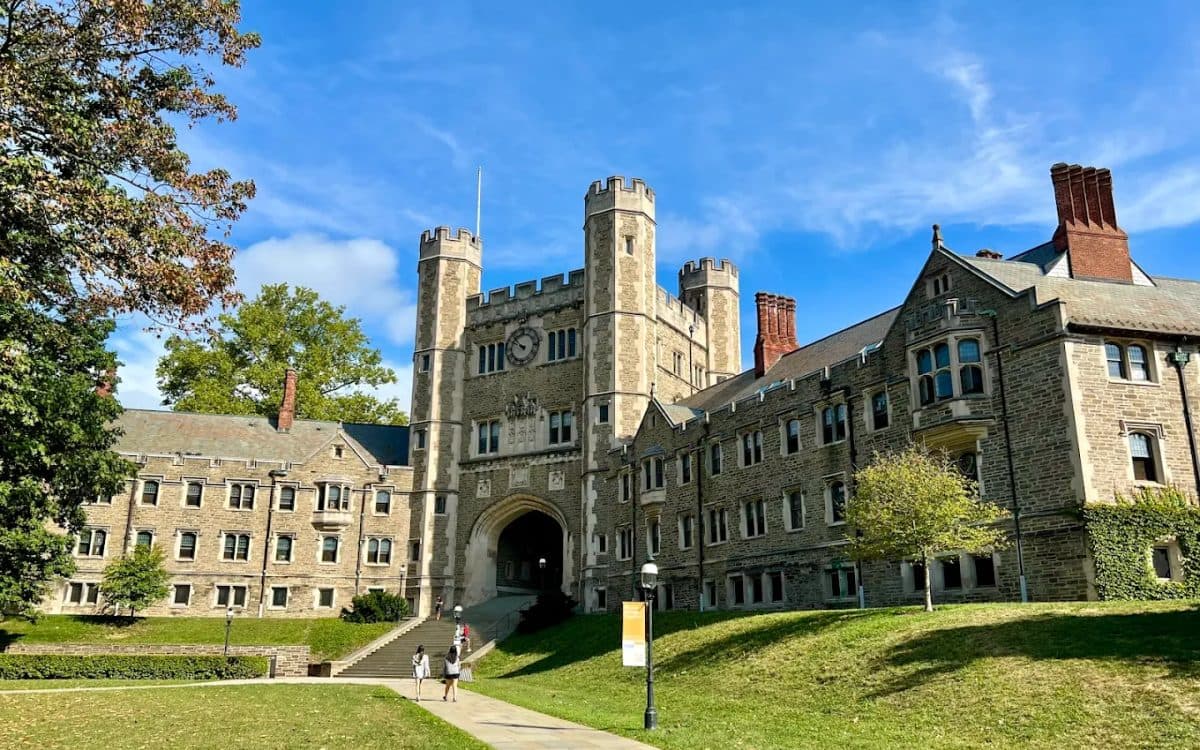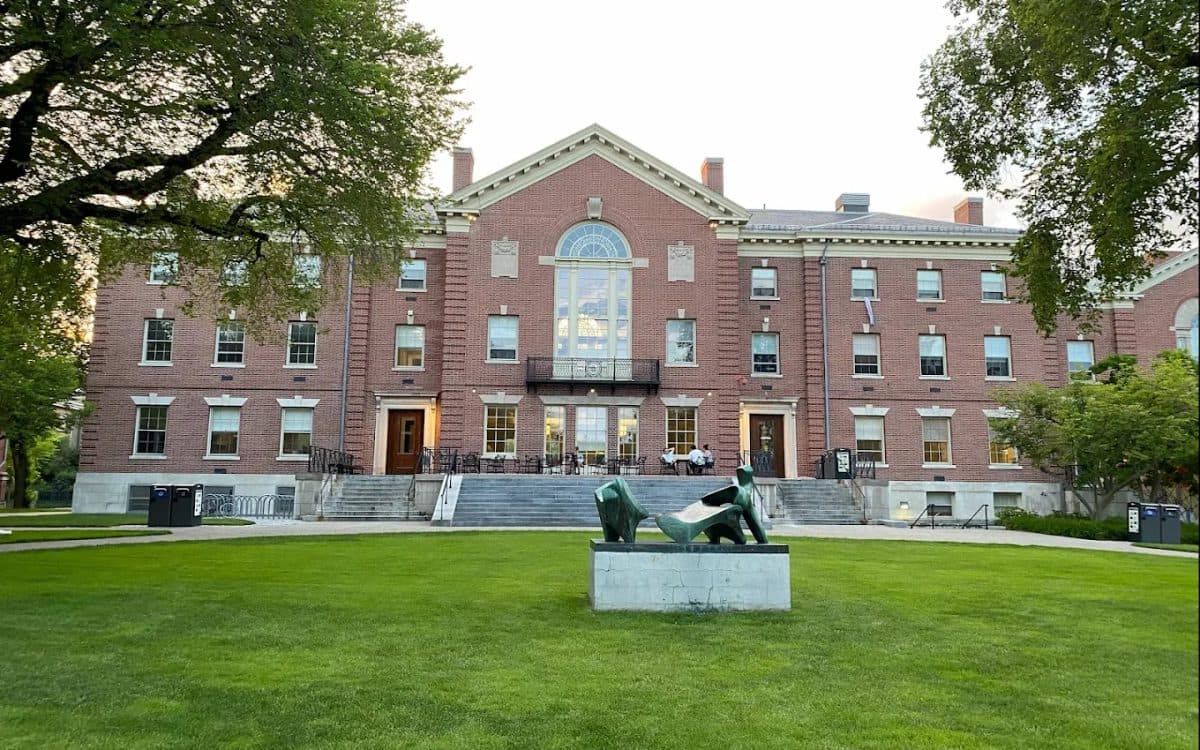
Here is what sets Brown University apart from every other Ivy, and why understanding it gives you an edge before you write a word of your application: Brown has no core curriculum at all. No mandatory distribution courses, no GPA, no class rank. You design your own education through the Open Curriculum, choosing from nearly 80 concentrations or building your own. And since fall 2025, Brown has become need-blind for international applicants, which means your family's finances no longer play any part in whether you are admitted.
Brown was founded in 1764 in Providence, Rhode Island. For students planning to study in the USA, this guide explains what it takes to study at Brown University as an international student — the admissions numbers Brown publishes for applicants from abroad, the 2026-27 costs, how the new need-blind aid works for Indian families, and what the Open Curriculum really means day to day.
Brown University at a Glance
Brown is a mid-sized research university with a liberal-arts heart. Its 7,951 undergraduates make it bigger than Dartmouth or Princeton but far smaller than Cornell, and the 8:1 student-to-faculty ratio in its Common Data Set means real access to professors from your first year.
Need-Blind vs Need-Aware: Where Brown Now Stands in the Ivy League
This is the most important policy change at Brown in two decades, and much of what you will read online is out of date. Brown has been need-blind for US applicants since 2003. Before 2025, international applicants were admitted on a need-aware basis. That changed with the Class of 2029, entering in fall 2025, after Brown met a $120 million fundraising goal to pay for it. Here is how the eight Ivy League universities now compare for international first-year applicants:
| University | International applicants | Need met |
|---|---|---|
| Brown | Need-blind (from Class of 2029) | 100% of demonstrated need |
| Dartmouth | Need-blind (from Class of 2026) | 100% of demonstrated need |
| Harvard | Need-blind | 100% of demonstrated need |
| Yale | Need-blind | 100% of demonstrated need |
| Princeton | Need-blind | 100% of demonstrated need |
| Columbia | Need-aware | 100% for admitted students |
| Cornell | Need-aware | 100% for admitted students |
| Penn | Need-aware | 100% for admitted students |
What the change means in practice. Under need-blind admission, asking for aid cannot count against you — so if your family has any real need, apply for aid with your application. Brown also notes that students admitted under the old need-aware policy "will not be eligible to apply for aid in future years if they did not apply for and receive scholarship at their time of admission." The simplest approach is to file the CSS Profile at the start, and that rule never becomes a question.
The Open Curriculum — How Studying at Brown Actually Works
- No core requirements
- Brown's College describes the Open Curriculum as "the flexibility to complete coursework in a variety of fields of study, without general core requirements." You are free to take a philosophy course alongside machine learning in your first semester, and Brown students commonly do.
- Concentrations, not majors
- Brown offers nearly 80 concentrations across departments and interdisciplinary fields, and you may design an independent concentration. Computer Science, Applied Mathematics, Economics, Biology, Public Health and Engineering are among the fields Indian students look at most.
- Grades your way
- Any course can be taken for a letter grade or Satisfactory/No Credit, and you can request narrative evaluations from instructors. Brown has no GPA and no class rankings.
- What you need to graduate
- At least 30 courses, the requirements of at least one concentration, demonstrated writing competence, and the equivalent of eight full-time semesters of study.
A tip for Indian applicants. The Open Curriculum rewards students who can explain *why* they want freedom and what they will do with it. Brown's essays are your chance to show intellectual curiosity across subjects, not just top marks in one. Applicants who treat "no requirements" as a plan rather than an absence of rules write the strongest Brown essays.
The PLME — Brown's Eight-Year Medical Route
The Program in Liberal Medical Education combines a Brown undergraduate degree with an MD at the Warren Alpert Medical School in one admission. International students can apply through the Common Application. Plan for two details early: the PLME office strongly encourages US permanent residency or dual citizenship, and financial aid is not available to international students during the medical school years. Brown's medical school tuition for 2026-27 is $75,162. Knowing this up front lets your family decide with clear eyes whether PLME or a standard Brown degree followed by medicine elsewhere suits you better.
Admissions for Indian Students
Undergraduate
- The numbers that apply to you: Brown's 2025-26 Common Data Set breaks applicants down by residence. 9,861 international students applied and 404 were admitted — about 4.1% — against 2,243 of 32,351 out-of-state US applicants, about 6.9%. Of those 404, 259 enrolled.
- The latest cycle: Brown's admission statistics page reports 2,688 admitted from 47,944 applications to the Class of 2030 (5.6%). Early Decision admitted 890 of 5,406 applicants (about 16.5%), and the March regular round offered admission to 1,674 more — roughly 4% of the regular pool.
- Testing is required. Brown reinstated the SAT/ACT requirement from the 2024-25 cycle, superscores both tests and accepts Score Choice. The SAT Essay and ACT Writing are optional. Fall 2025 entrants had a middle-50% SAT of 1470-1550 (median 1520) and an ACT of 33-35.
- Deadlines: Early Decision is 1 November (binding); Regular Decision fell on 5 January in the last published cycle — confirm this year's date on Brown's admission site. Financial aid deadlines for 2026-27 applicants are 2 November 2026 for ED and 1 February 2027 for RD.
- What you submit: the Common Application with Brown's own supplement, school transcripts, a counsellor report and teacher recommendations, and test scores. For exams taken after decisions are released, such as Class XII boards, Brown relies on predicted results from your school and may rescind an offer if final results differ significantly.
Plan Early Decision carefully. Brown's ED round admitted roughly four times the regular-round rate for the Class of 2030. Because Brown is now need-blind for international applicants and meets full need, ED no longer forces a trade-off between your chances and your aid — but it is binding, so use it only if Brown is clearly your first choice. Working out whether ED is right for your profile is exactly the kind of decision worth talking through with us.
English Language Requirements
- Undergraduate: Brown highly recommends an English test if English is not your first language, a primary home language, or your language of instruction "for the duration of [your] secondary school career". Its expected minimums: IELTS 8.0, TOEFL iBT 105 (tests before January 2026) or 5.5 (January 2026 onward), Duolingo 130, PTE 75, Cambridge C1/C2 191.
- Brown's IELTS bar of 8.0 is higher than Cornell's 7.5, so if you do need a test, give yourself time to prepare properly.
- Graduate School: TOEFL minimum 90 (before 21 January 2026) or 4.5 (from that date), and a recommended IELTS of 7.0. The Graduate School's exemption list of English-speaking countries does not include India, so most Indian master's and PhD applicants should plan to take a test.
Graduate — Master's and PhD
Brown's Graduate School accepts graduates of non-US universities who have completed the equivalent of a US bachelor's degree. It publishes no blanket rule on three-year Indian degrees, so if you hold a BA, BSc or BCom, write to the specific programme before paying the application fee and get its answer in writing. A four-year BE or BTech raises no equivalency question. Graduate tuition for most doctoral and on-campus master's programmes is $9,320 per course in 2026-27, up 4%.
The Real Cost of Brown in 2026-27
| Item (2026-27 undergraduate) | Amount |
|---|---|
| Tuition | $74,568 |
| Fees (incl. $100 one-time academic record fee) | $3,084 |
| Housing (standard room) | $10,710 |
| Food (20-meal plan) | $8,754 |
| Personal expenses | $2,878 |
| Published cost of attendance | $99,984 |
| Student health insurance (unless waived) | $5,283 |
- Health insurance is extra. Brown says a student's health costs are not included in the cost of attendance; if you do not waive the university plan, $5,283 is added.
- Travel is added based on your home address, so an Indian student's aid budget accounts for flights home.
- Books are often covered. Most students eligible for Brown scholarship join the Book/Course Materials Support programme, under which required books and materials are covered at no cost, which is why they are not in the standard budget.
- Tuition rose 4% for 2026-27. Assume similar increases in each year of your degree when you plan four years of costs.
The budget to plan on. For a family paying in full, a realistic first-year figure is $99,984 plus $5,283 insurance plus flights — comfortably over $105,000. Your I-20 will be issued against Brown's cost figures, so have funding documents ready for that level. For a family with need, the picture is very different, as the next section shows.
Financial Aid for Indian Students
- 1. Need-based only — no merit scholarships
- Brown's admission office: "Brown does not offer aid based on academic achievement, athletic ability, or any other form of merit." Treat any site advertising a Brown merit award for Indian students as unverified. Brown's real support is need-based, and for families with need it can cover most or all of the cost.
- 2. 100% of need met, without loans
- Brown states it "meets 100% of each student's demonstrated financial need" and that 0% of demonstrated need is met with loans. Its 2025-26 Common Data Set reports that every undergraduate with need who received aid had that need fully met, with an average need-based grant of $68,394.
- 3. What international students actually receive
- The Common Data Set reports 254 international undergraduates receiving Brown aid in 2025-26, averaging $85,164 each and $21.6 million in total. The first need-blind class only arrived in fall 2025, so these figures mostly reflect students admitted under the old policy. Brown also reports the share of international undergraduates receiving aid rose from 15% before 2021 to 40% in the Class of 2027.
- 4. How to apply — the CSS Profile
- International applicants file the CSS Profile using Brown's code 3189. Brown does not offer CSS Profile fee waivers. The College Board's IDOC service may be used to request documents such as tax returns or employer income statements, though Brown notes it does not require an IDOC packet from every family. Deadlines for 2026-27: 2 November 2026 (ED) and 1 February 2027 (RD).
- 5. The published income thresholds
- Brown advertises a $0 parent contribution for most families earning under $60,000 and at least full tuition ($74,568) for most families under $125,000, with typical assets. Its calculators are framed around US families, so ask Brown's Office of Financial Aid how your family's income and assets will be assessed — the CSS Profile is where that assessment happens.
Life in Providence
Brown sits on College Hill, overlooking downtown Providence, the capital of Rhode Island. It is a genuine city campus but a walkable one, and Boston is close enough for weekend trips by train. Winters are cold by Indian standards, so budget for proper winter clothing in your first weeks. With about 15% of undergraduates from outside the US, you will join a varied international community rather than being one of a handful.
- Housing and food: the standard room rate for 2026-27 is $10,710, and the 20-meal plan $8,754 — confirm your housing options with Brown's residential life office once admitted.
- Getting home: there are no direct flights from Providence to India, so expect to connect through a larger hub. Check routes and fares in advance of each break.
- Community: look up Brown's current student organisation directory for South Asian, cultural and faith groups before you arrive — connecting with them early makes the first weeks much easier.
After Brown — Work Rights in the US
- OPT gives 12 months of work authorisation after graduation, and STEM OPT adds 24 months for degrees on the DHS STEM designated list — relevant to Brown concentrations such as Computer Science, Applied Mathematics and Engineering. Check the CIP code of your concentration.
- The H-1B is selected by lottery, and from FY2027 DHS uses a wage-weighted selection: higher wage-level offers enter the pool more times. Entry-level offers have lower odds, so plan early with your career office.
- F-1 rules are changing. A DHS final rule published in July 2026 replaces "duration of status" with a fixed admission period from 15 September 2026. Ask Brown's international student office how it applies to your programme before you travel.
Applying from Bangalore and Karnataka
If you are applying from Bangalore or elsewhere in Karnataka, the Brown process is the same as for any Indian applicant — but a few local details are worth planning around early.
- Karnataka PUC students: Brown does not publish a policy specific to II PUC results from the Karnataka School Examination and Assessment Board, so ask Brown's admission office how it will read your board marks. Plan on sending strong Class X and I PUC results, your school's predicted II PUC marks, and an SAT or ACT score, which Brown requires whatever your board. CBSE, ICSE and IB students in Bangalore follow the same approach.
- Graduate applicants from Karnataka universities: Brown's Graduate School does not publish a list of Indian institutions. Whether you graduated from VTU, Bangalore University, IISc, NITK Surathkal, or a college such as RV, PES, BMS or Manipal, the test is the same — the equivalent of a US bachelor's degree. A four-year BE or BTech meets that; for a three-year degree, get the programme's answer in writing.
- Visa interview locations: the US Mission in India lists visa services at the Embassy in New Delhi and the Consulates General in Chennai, Hyderabad, Mumbai and Kolkata — Chennai and Hyderabad are the closest to Bangalore. Through the official scheduling system you book two appointments, one at a Visa Application Centre (VAC) for fingerprints and photo and one for the interview, so plan the trip around both. The official ustraveldocs site also lists a document drop-off location in Bangalore (J.P. Nagar), but that is for applicants eligible to skip the interview; as a first-time student visa applicant, plan on an in-person interview and check the current rules on the official site when you book.
- Flying out of Kempegowda International Airport (BLR): expect a one-stop (or longer) itinerary to the US East Coast, connecting via a major hub in the Gulf, Europe or the US. Compare routes early for the August arrival and each winter break.
- Talk to us in Hebbal or online: Falcon Nova's office is on the 7th floor of Kirloskar Business Park in Hebbal, North Bangalore, and you can book free counselling in person or online. If you would like help planning this, book a session.
Is Brown Right for You?
Brown is an outstanding fit if you want an Ivy League education you design yourself — especially if your interests cross boundaries, such as computer science with philosophy, or public health with economics. Since fall 2025, it is also one of the few universities anywhere where an Indian family's finances play no part in admission and full need is met without loans. Compare it with Dartmouth if you want a smaller, more rural Ivy, and with Princeton or Yale if need-blind aid is central to your plan.
If you prefer a structured programme with clear required courses, a university with a defined curriculum may suit you better — and working that out early is a strength. The international admit rate was about 4.1%, so build a thoughtful list of universities around Brown. Merit aid is not available, so if a merit scholarship is essential to your plan, we can suggest better-matched options.
Ready to Build Your Brown Application?
Brown rewards applicants who can show how they would use its freedom — which concentrations you would combine, what you would explore outside them, and why the Open Curriculum suits the way you learn. Add the decisions around Early Decision, the SAT, a possible English test and a CSS Profile filed at the right time, and there is a lot to get right. Falcon Nova Consultants has helped hundreds of Indian students plan applications to top US universities. Book a free, no-obligation counselling session and we will help you shape a Brown application that reflects who you really are.
Book Your Free Counselling Session